

What are endowments?
A type of life insurance, endowments are also known as a savings plan. With endowments requiring the policyholder to pay a fixed amount for a specified time period (e.g. one-off payment or regularly for 5 to 25 years), endowments are seen as a disciplined way to save. By helping us to build up a sum of savings over a specified period of time, endowments are usually used for saving and can be used to help us to achieve our financial goals.
Endowment plans are offered on a participating basis and will accumulate cash values. You may either receive these cash values at designated policy years or at maturity of policy. Endowments also allow you to surrender your policy and cash out should you urgently require cash.
(See "The Truth About Endowments")
What is an Investment-Linked Policy (ILP)?
As explained in our previous article "My agent sold me an ILP. Should I keep it?", an Investment-Linked Policy (ILP) is an insurance plan that allows you to invest and insure with just one plan. Similar to a whole life insurance plan, ILPs have cash values and can the policy can be cashed out should you urgently require cash.
While both ILP and endowments plans are insurance policies that allow for wealth accumulation, these two plans are actually quite different. Here are the differences between the two.
#1 Cash value
While endowment and ILP both will accumulate cash values, the way that this is being structured differs between the two plans. For example, a main difference is the guaranteed cash value of the plan.
Endowments |
ILP (Investment-Linked Policy) |
|
Accumulates cash values? |
Yes |
Yes |
Returns are guaranteed? |
Yes, a portion of cash values are guaranteed |
No |
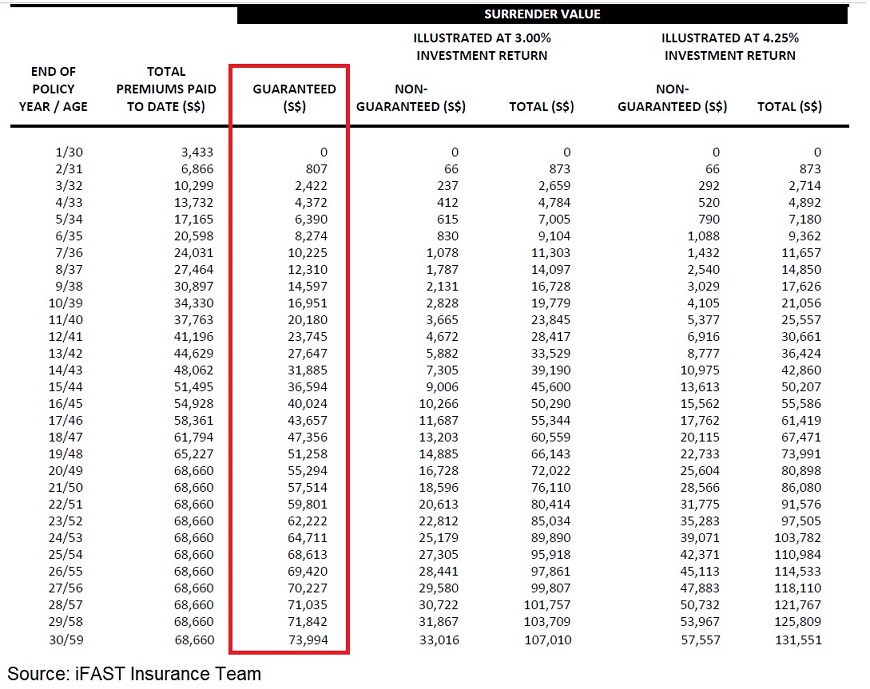
In endowment plans, the cash value usually comes in the form of a guaranteed and non-guaranteed component. This means that a portion of the cash value in your whole life plan is guaranteed regardless of market performance in the future. The only variable then comes from the non-guaranteed portion with this non-guaranteed returns having the potential to offer higher returns. Endowment plans may also be capital guaranteed. This means that you will receive the total premiums that you have paid to date as your guaranteed cash component at policy maturity.
Illustration: An endowment plan for a non-smoker, male.
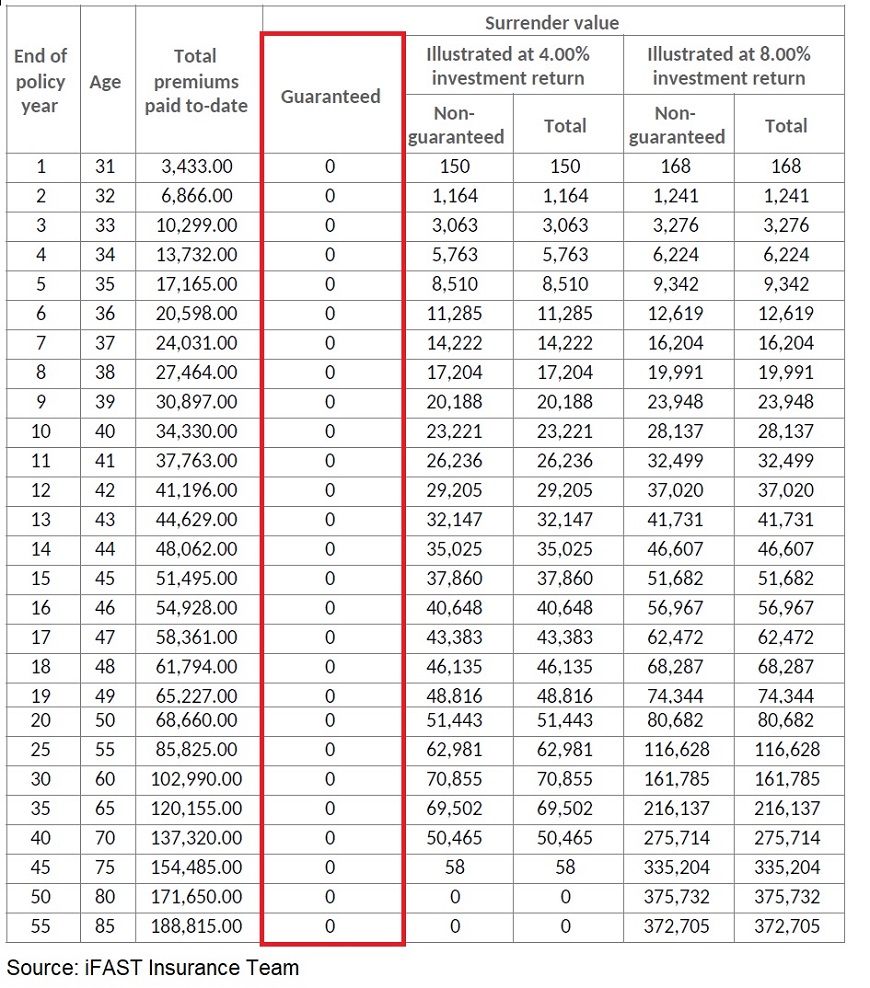
ILPs on the other hand have no guarantee on how much your policy will be worth in future. This is because ILPs actively invests a portion of your premiums thus subjecting you to the investment risks that comes together with the promise of higher returns. Your cash value in an ILP is thus subjected to the performance of your sub-fund units with the value of your policy fluctuating according to market conditions and your investment performance. There are therefore no guaranteed returns in ILPs with the value of your policy entirely up to the performance of the sub-fund units that you choose to invest in.
Illustration: An ILP for a non-smoker, male.
#2 Risk level
Another difference between endowments and ILPs is the risk tolerance for these plans. To put it simply, this refers to level of risk that comes together with the plan.
Endowments |
ILP (Investment-Linked Policy) |
|
Illustrated returns |
Moderate returns |
Potentially higher returns |
Risk tolerance |
Suitable for conservative individuals who have a low risk appetite |
With the investment risks involved, ILPs come with higher risks |
Capital guaranteed |
Dependent on plan. Some plans are fully capital guaranteed at maturity, some plans only guarantee a portion of your premiums paid at maturity. |
No. The performance of your chosen sub-funds will determine the value of your policy. |
While endowments allows you to accumulate cash values, returns from these plans tend to be more modest as compared to the potentially higher returns that you can get from an ILP. This is because ILPs actively invests a portion of your premiums and come with an investment risk as highlighted in our previous point. Endowments however, offer moderate returns in exchange for the lower risk that you are taking.
Illustration: Endowment plans for a non-smoker, male.
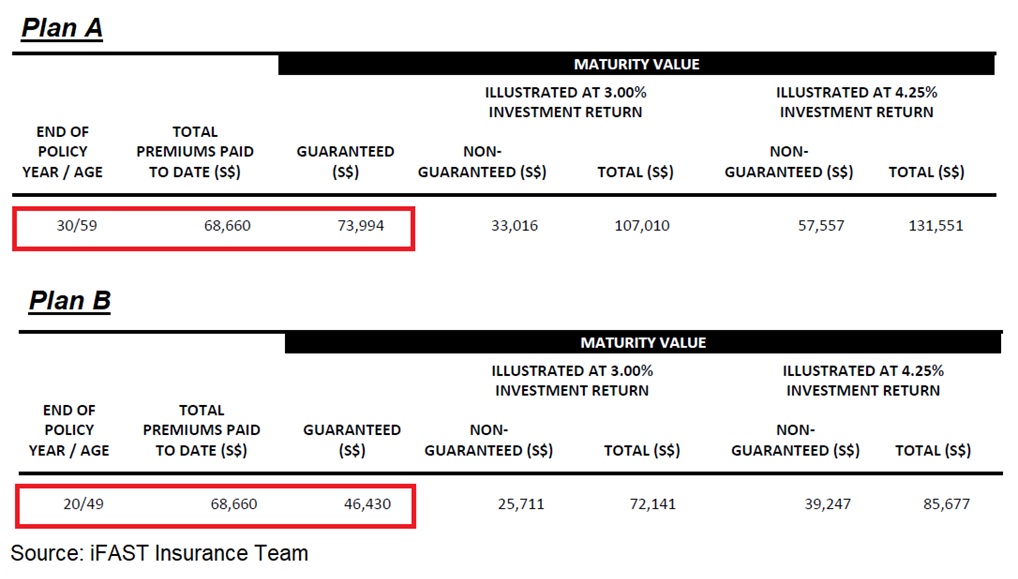
As shown in the table above, there will usually be a portion of your premiums that are guaranteed at maturity for endowment plans. While different plans offer different benefits and guaranteed cash value, an endowment is unlikely to leave you with a zero value plan at the end of your policy term.
ILPs however, has no guaranteed component for their investment returns. As ILPs are exposed to investment risk and is dependent on market performance, thus running the risk of having little to no value in future should the markets perform badly.
(See "What should I do with my maturing endowment plan?")
#3 Control
Insurer's expenses |
Endowments |
ILP (Investment-Linked Policy) |
Choice of investment products |
Premiums go into your insurer’s participating fund. You will not have a choice on what your insurer invests in. |
Choose what you want to invest in from a range of sub-funds |
Option to tweak investment portfolio according to current financial needs |
Premiums go into your insurer's participating fund. You will not have a choice on what your insurer invests in. |
Can make changes to your portfolio of sub-funds to align with your current financial goals/needs. |
Endowments are insurance plans with a saving element. Seen as a disciplined way to save, a benefit of endowments is that this allows the policyholder a hands off approach towards their wealth accumulation process. After purchasing the policy, all the policyholder has to do is to wait to receive the returns from the endowment plan. However, this also means that the policyholder of an endowment plan has no control over what the insurer chooses to invest in.
ILPs however, combines insurance and investments into one plan. Policyholders of ILPs are able to choose the sub-funds that they want to invest into and can make changes to their portfolio of sub-funds to better suit their current financial needs. This allows policyholders of ILPs more control over what they are investing in. However, do note that the range of investment products available through an ILP is still limited to what the insurer has to offer. If this limitation on the investments offered via an ILP bothers you, then an ILP is not for you.
To conclude,
As endowments are seen as a disciplined way to save, endowments can be a useful way to help you to save for your short or long term financial goals.
ILPs however, may be less ideal. As explained in our previous article "ILP vs Term Life – Understanding the difference", we do not recommend the use of ILPs. This is because ILPs which seeks to serve a dual purpose of insurance and investment is likely to end up serving neither purpose. If you would like to get protection coverage from insurance, we recommend getting a term life insurance instead.
Let FSMOne help with your insurance planning
Live better, safer. Get a complimentary review today!
Available Products on FSMOne Insurance |
Term Life, Whole Life, Critical Illness, Annuity, Health, Endowment, General Insurance (Personal and Commercial) from AIG, Allianz, Chubb, Etiqa Insurance, FWD Insurance, Great Eastern, Manulife, NTUC Income, QBE, Sompo and Tokio Marine Life Insurance *Please check with our advisory team if the product you want is available on FSMOne Insurance |
Interested to learn more? Check out these articles:
Your Cheatsheet To Insurance Terms
Debunking Cancer Insurance Myths – Here Are 4 Things You Must Know
Best Travel Insurance for Covid-19 coverage