
Macro Research

Asia: Time to stock up on Asian equities as catalysts for recovery emerge

As the catalysts for a recovery in regional export growth progressively emerge, we believe that the economic and corporate earnings growth across the bloc are primed for revitalisation. We think now is the time for investors to stock up on cheap Asian equities with robust upside potentials.

  • |
  • Published on 02 Nov 2019

Asia: Time to stock up on Asian equities as catalysts for recovery emerge | Open a FREE FSM account and manage all your investments conveniently in ONE place


  • While Asian exports have plunged across this year, promising signs of a recovery in exports have starting to flash across the region, driven by two main catalysts that we believe will progressively materialise over the next few months. 

  • Profit outlook expected to improve for Asian companies. Earnings estimates across FY 2019, 2020 and 2021 have reversed from their downtrend and have since been revised upwards in September.

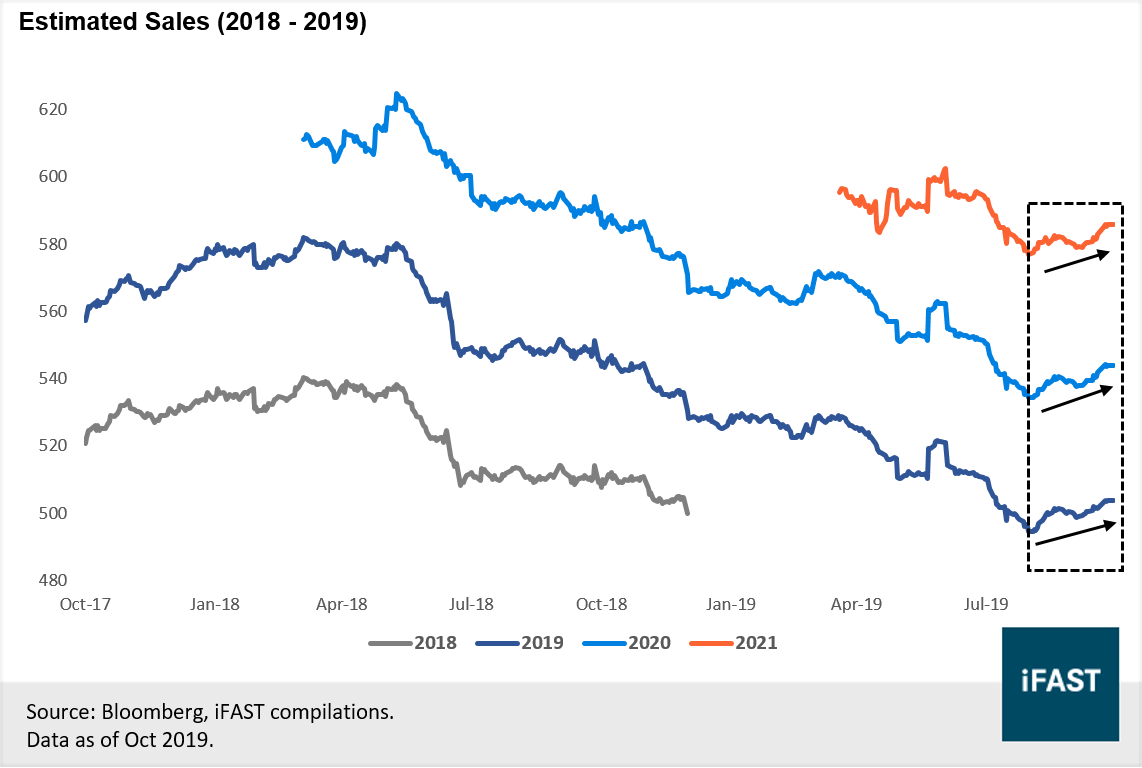
  • This is supported by similar trend in sales estimates where estimates for FY 2019, 2020 and 2021 were revised upwards in early September. The improvement in earnings are supported by a fundamental boost in revenue.

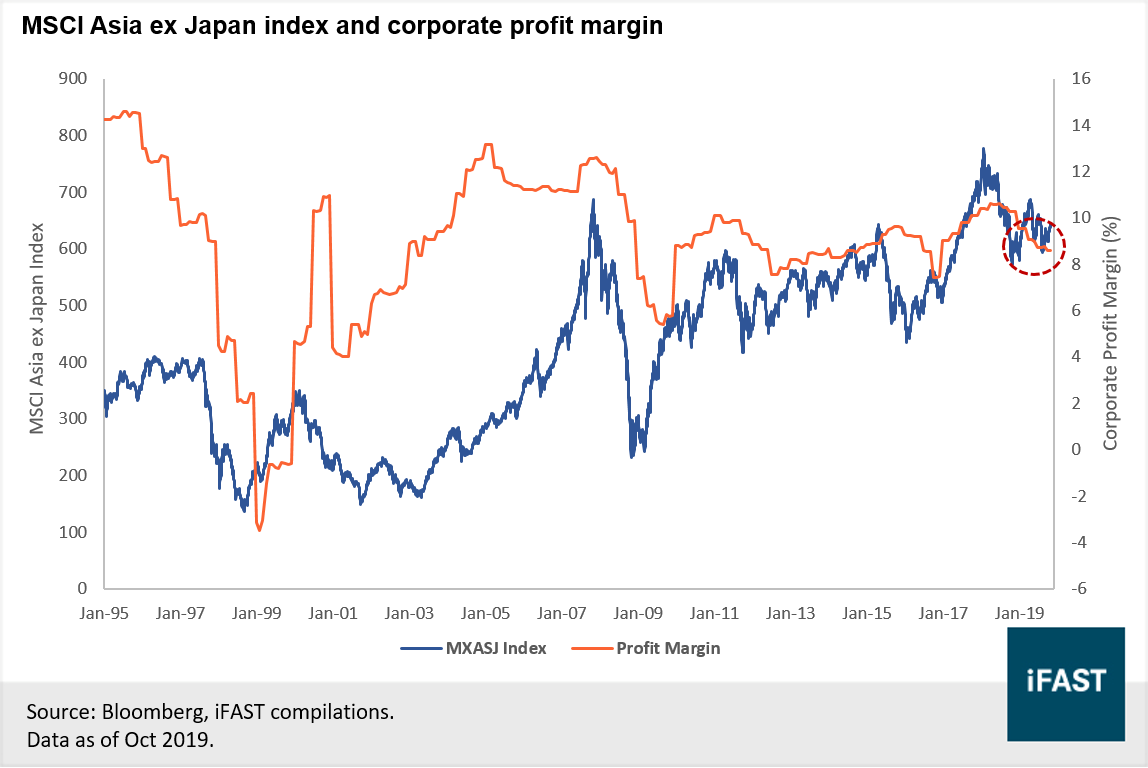
  • Profit margins for Asian companies have bottomed out and are expected to rebound. Current level is below ten-year average and significantly below its cycle high. With profit margin at 31 percentile, we believe there is ample headroom to expand thus driving equity prices higher.

  • Valuations for MSCI Asia ex Japan remains cheap while supported by robust double-digit earnings growth. Asia ex Japan equity market offers an attractive upside potential of over twenty percent by FY2021.

  • Overall, we maintain our star ratings of 4.5 stars “Very Attractive”.  It is a good time to build position in Asian equities at the current juncture, ahead of its expected exports recovery and while valuation remains cheap.

Economic growth in Asia has been knocked down a peg as a multitude of headwinds dragged down exports. With the growth of the region primarily characterised by its trade activities, a rebound in exports within the region is key to the revitalisation of economic and corporate earnings growth across the bloc. 

Looking ahead, we believe that a near-term recovery in Asian exports is imminent due to two main catalysts: (i) Cyclical upswing in global semiconductor industry and (ii) Re-direction of new orders into existing production capacity in other Asian economies after the one-off trade war shock. 

Export-reliant markets such as South Korea, Taiwan and Japan, will likely lead the rebound in exports over the coming quarters, especially for electronic goods. Such an export recovery will serve as an impetus to drive corporate earnings higher for the Asian equities – many of which offer highly attractive upside potentials for the next two years (Table 1).

(Related Article – Asia: Export recovery inbound)

Chart 1: Constituents of MSCI Asia ex Japan Index 
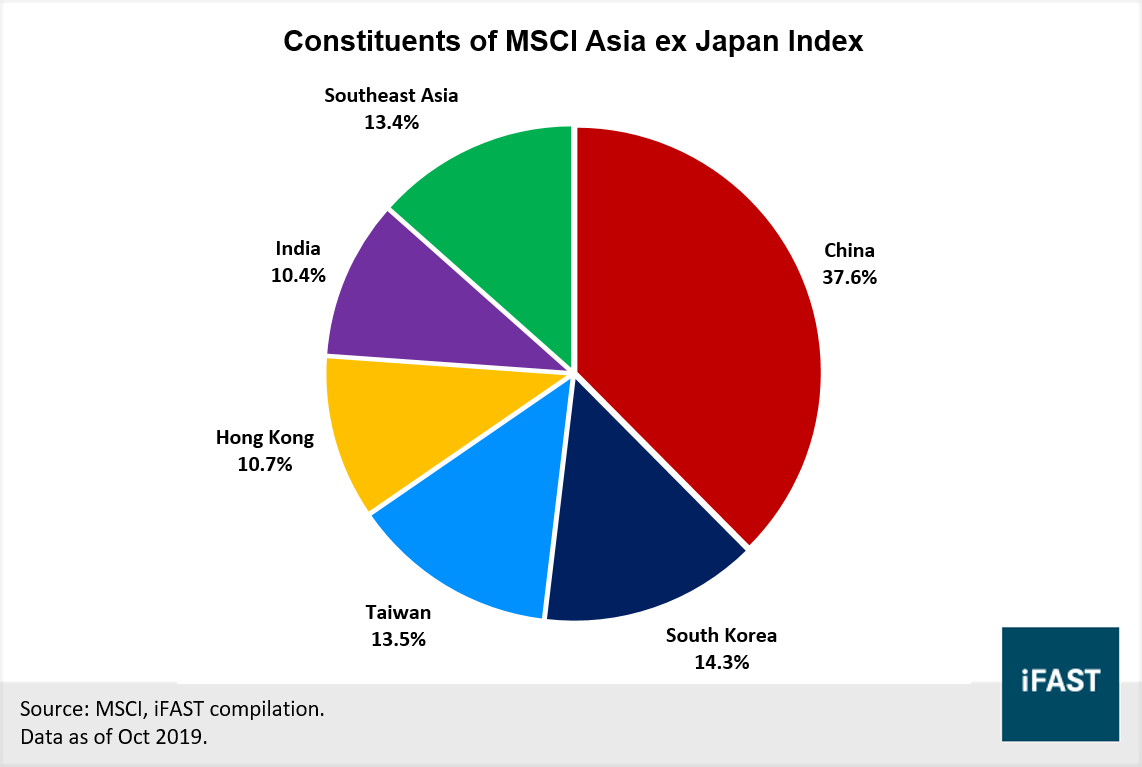

 
Table 1:  Potential upside of Asian equity markets for the next two years

Markets

FY2021
Upside from Today (%)

China (A-Shares)

33%

Hong Kong

66%

South Korea

34%

Taiwan

17%

India

7%

Southeast Asia

18%

Source: Bloomberg, iFAST estimates.


Outlook for individual Asian markets 


Despite the gloom surrounding Asian equities currently, the near to mid-term outlook for the individual economies that make up the MSCI Asia ex Japan Index are generally quite positive:


China – Highly Attractive (4.0-4.5 stars of 5; China-A and China-H respectively)


While China’s GDP growth has slipped, amid domestic and external challenges, we think investors are overly pessimistic about the economy. Even with the decline, on a nominal basis, China’s GDP growth is still one of the highest among emerging markets. 

Looking ahead, its domestic economy is poised to improve with the series of supportive fiscal and monetary policies implemented by the central government this year. We believe that policymakers still have substantial counter-cyclical ammunition to tap on, which will be helpful in boosting the slowing economic growth.

Leading indicators have bottomed in recent months, pointing to a possible rebound and near-term recovery in economic activity. While external demand moderates, domestic demand continues to display robust signs of resiliency. With economic growth expected to remain resilient ahead, corporate earnings in China is set to expand at a robust double-digit pace in the next two years. 

Most importantly, China-A’s undemanding market valuation, alongside a robust earnings growth outlook, present an upside potential of more than thirty percent by end-2021. China-H (measured by HSML100 Index) offers an even more compelling valuation, which currently trade below one standard deviation of its ten-year average level.


Hong Kong – Highly Attractive (4.5 stars of 5)


Hong Kong faces suppressed valuation, amid a confluence of headwinds from US-China trade tension and public demonstrations. The four months long of social unrest have drove tourists away from HK, especially the Mainland Chinese tourists, who accounts for the bulk of tourism spending. Consumer and property stocks are most affected by the decline in tourism activities. However, these sectors only account for 15% of the Hang Seng Index weightage. 

We think investors’ concerns for the current political unrest and its impact on Hong Kong equities are overblown. The combination of an attractive valuation (currently near its historical low), easing trade tensions and stimulus measure from Beijing will help lift the Hang Seng Index (HSI) in the near-term. 

The risk-reward ratio of an investment in Hong Kong equities is currently skewed towards the upside, with HSI presenting attractive potential upsides that can materialise quickly in the event of a positive resolution of the political unrest. 


South Korea – Highly Attractive (4.5 stars of 5)


South Korea equities have faced drastic earnings revisions, which arose from a combination of external headwinds from the trade war, slowing China consumption and memory price weakness. We believe pressure from the external sector are set to abate as the cyclical semiconductor upswing kicks in. Being an export-oriented economy (Exports comprised around 42% of Korea’s GDP), South Korea’s economic growth is highly susceptible to changes in external demand. 

Looking ahead, we expect trade conditions within the regional bloc to stabilise and improve heading into the year-end. Electronics components are progressively the key driver for regional trade and manufacturing activities within the major Asian economies. South Korea’s indispensable position in Asian regional manufacturing chain for electronics positioned it as a strong contender for a sharp rebound in growth.

Growth projection into 2020 and 2021 remains highly robust. Analysts’ consensus largely expect earnings to swing strongly by 24 and 16 percent into FY2020/21, driven mainly by the semiconductor upcycle. Its current undemanding valuation offer decent robust potential upsides, while room for negative earnings revisions is limited ahead. 


Taiwan – Highly Attractive (4.0 stars of 5)


The outlook for Taiwan this year has been a rather mixed one, and market participants appears to be divided over it. For the first five months of this year, Taiwan’s exports and manufacturing activities have been consistently sluggish, caused by the cyclical downturn of the global electronics sector, as well as the US-China trade war overhang. 

On the other hand, the emergence of next-generation technological trends, such as 5G network and cloud computing, present a more upbeat tone on the growth prospects of Taiwan’s trade-oriented manufacturing-focused economy.

We think that Taiwan’s strength as a global electronics manufacturing powerhouse meant that it is well-positioned for a cyclical upswing in the semiconductor demand. Even with US-China trade conflicts in the background, we believe that the global semiconductor sector is set for a strong recovery by year-end, buoyed by the robust organic demand for 5G telecommunication and cloud computing server infrastructure across the globe.

Coupled with a reasonable valuation and a relatively high dividend yield (in the Asia-Pacific region) of Taiwan’s equity market, we believe that Taiwan remains a highly attractive investment opportunity for investors willing to set their sights further ahead into 1-2 years’ time.


India – Attractive (3.0 stars of 5)


Weakening domestic economy, highlighted by a significant decline in private consumption and investment. The current economic slowdown expected to be cyclical in nature, and we expect a cyclical recovery in India to materialise as early as FY2020, with the accommodative easing and hefty fiscal stimulus from its policymakers. 

Earnings headwinds persist for the major sectors within Sensex Index, which set up room for further negative earnings revisions. Its current valuation lean towards the expensive-end, which leave little room for meaningful expansion. A combination of dull capital gain prospect and modest dividend yield of 1.5-2% for the next two year render Indian equities an unattractive investment choice at current juncture.


Southeast Asia – Attractive (3.0-4.0 stars of 5)


The recovery in the global semiconductor cycle and recent positive developments in trade talks are two key driver for a rebound in economic growth among ASEAN economies, with current weakness in exports to gradually dissipate moving forward. ASEAN economies are also primed to be one of the biggest beneficiary of the trade war. 

With the US-China trade war expected to persist in a stalemate, firms have started to relocate production lines to South-East Asian economies, where cost of land and labour are lower. We expect the influx of foreign investment dollars to continue accelerating, especially as the infrastructure within the region gradually improve. 

Valuation for ASEAN equities are not only cheaper relative to EM peers (such as LATAM and EMEA), but earnings outlook is progressively more optimistic as several positive catalysts have started to materialise.


Profit outlook expected to improve for Asian companies


Earnings estimates for the region across FY 2019, 2020 and 2021 have seen a robust rebound since early September (Chart 2). This rebound was primarily driven by Chinese A and H-shares equities as well as Hong Kong equities. Moreover, the decline in earnings estimates for most Asian markets, which we saw since the start of 2019, have showed signs of bottoming. 

With the current macro backdrop of renewed trade progress, potential rebound in semiconductor demand and Asian economic growth, we maintain an upward bias on earnings revision moving into 2020.

September’s earnings revision was supported by upwards revision in sales estimates across FY 2019, 2020 and 2021 (Chart 3). Similarly, Chinese A and H-shares equities as well as Hong Kong equities drove the upwards revision while other markets are bottoming out. This suggests that the revenue outlook for Asian companies is rosier moving forward and, therefore, the improvement in earnings for Asian companies are substantiated by a fundamental boost in revenue.

Chart 2: Earnings estimates for FY 2019, 2020 and 2021 have rebounded
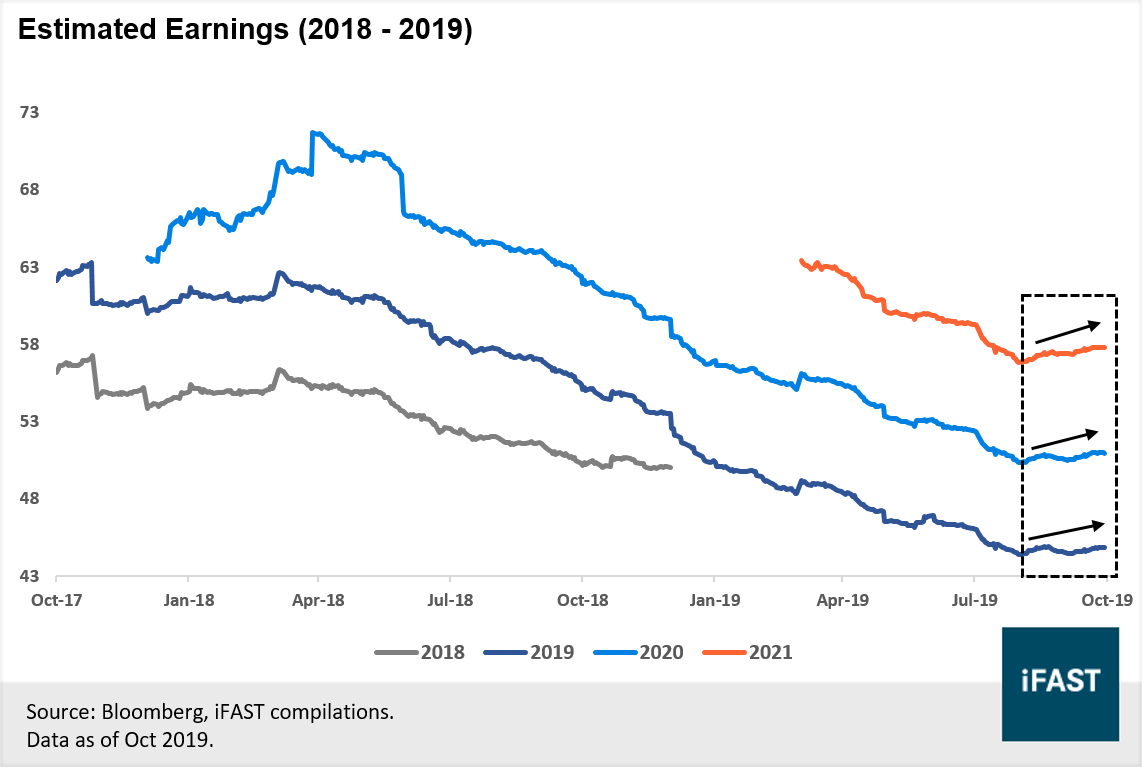


Chart 3: Sales estimates for FY 2019, 2020 and 2021 have also rebounded


Profit margin for Asian companies likely to expand


With an expected improvement in both revenue and earnings for Asian companies (Chart 2 and 3), we anticipate profit margin for Asian companies to rebound. This means Asian companies will become more profitable moving forward, as the profit per output picks up.

As observed from chart 4, current level of profit margin for Asian companies (8.6% as of 31 October) is below its cycle average of 9.0% and significantly lower than its cycle high of 10.6% (before trade war started, around June 2018). Residing around the lowest level for the current economic cycle, profit margin is at a mere 31 percentile (within the current cycle). 

This means it has tremendous room to expand till the cycle-high of 10.6%, therefore, we expect substantial improvement in profitability for Asian companies which will likely drive prices of Asian equities higher.

Chart 4: Profit margin are almost at cycle-low and have likely bottomed out


Attractive Valuation and Earnings Growth 


Valuations of Asian equities remain cheap across history and is concurrently supported by robust double-digit earnings growth for the coming years. Moreover, the profit outlook for Asian corporates have also turned rosier. 

With our fair PE ratio of 14.5X on projected EPS of MSCI Asia ex-Japan index, we expect potential upsides of 11% and 26% for FY2020 and 2021 (Table 2).

Table 2: Asia ex-Japan index offer decent upside potentials, thanks to its reasonable valuation and robust earnings growth

MSCI Asia ex-Japan Index FY2018 FY2019 FY2020 FY2021
Price-Earnings Ratio (X) 13.5 14.7 12.9 11.4
Expected Earnings Growth YoY% 2.6% -8.4% 13.9% 13.5%
Earnings Per Share (EPS) 47.3 43.3 49.4 56.0
Projected Fair Price
(Based on Fair PE ratio of 14.5X)
- - 716 812
Potential Upside from Today (%) - - - 26%
Source: Bloomberg, iFAST estimates.       

In the near-term, we expect positive catalysts such as the semiconductor upcycle, positive progress on the US-China trade talks and an economic recovery in Asia to support valuation re-rating towards our fair PE value of 14.5X for MSCI Asia ex-Japan index. 

We expect an organic expansion in PE valuation of Asia ex-Japan index in the mid to long-term, arising from factors like:

(i) Positive Structural macro trends in Asia (urbanisation, rural- urban migration, rising middle class); 
(ii) China's rising economic importance and its composition in the index and;
(iii) projected above-average economic growth (CAGR) of emerging Asia vis-à-vis against other regions. 

Overall, we maintain our star ratings of 4.5 stars “Very Attractive” for Asia ex-Japan market.  

We think investors should seize the opportunity to accumulate more exposure to the Asia ex-Japan market, to take advantage of its cheap valuation while positioning for a robust recovery in export activities within the Asian region. 

For investors seeking an actively-managed fund for exposure to the Asian market can consider the Schroder Asian Growth Dis SGD. On the other hand, investors who prefer a passive, lower-cost ETF option can consider the iShares Core MSCI AC Asia ex Japan Index ETF.

Chart 5: Asia ex-Japan index current trades below our fair PE valuation
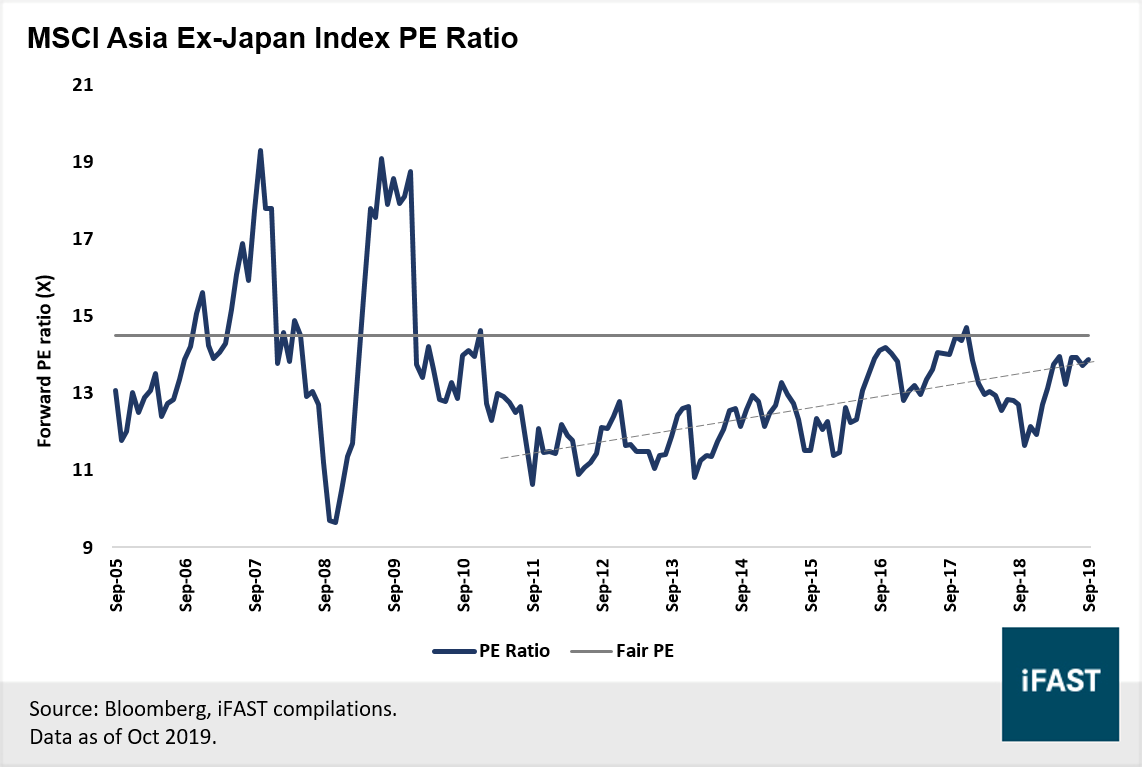


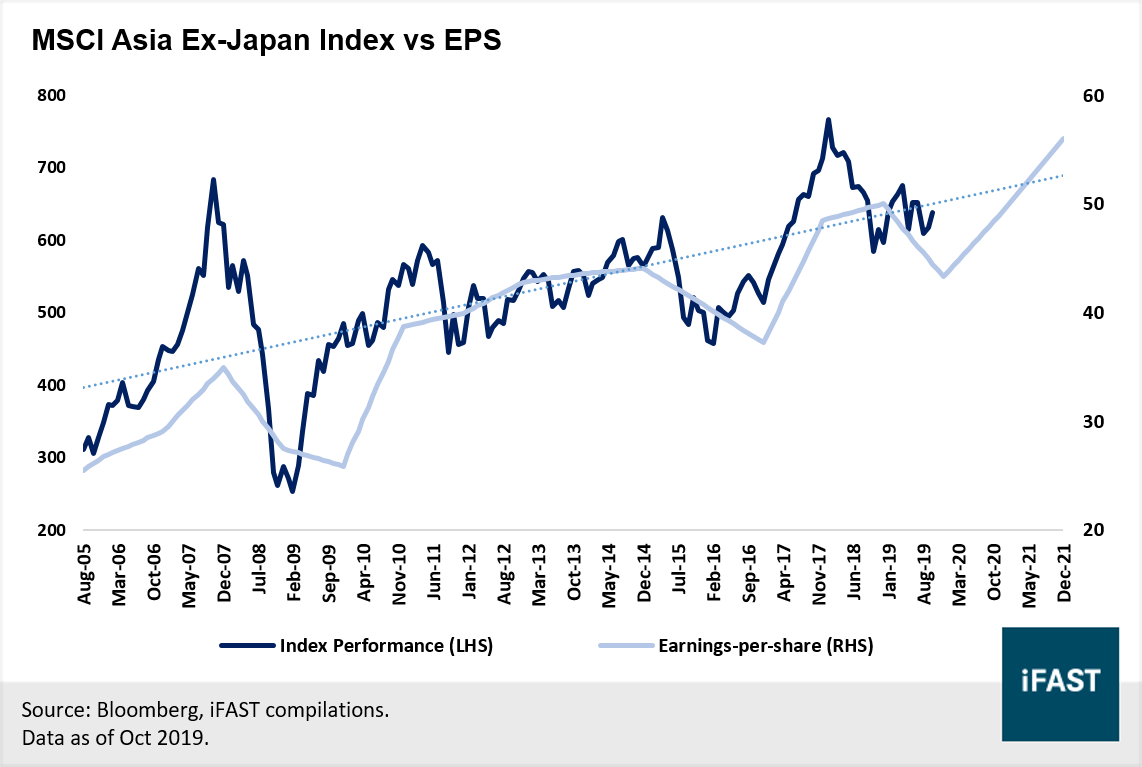
Chart 6: MSCI Asia ex-Japan index and its underlying earnings trend upwards across the longer term


The Research Team is part of iFAST Financial Pte Ltd.     


All materials and contents found in this site are strictly for general circulation and informational purposes only and should not be considered as an offer, or solicitation, to deal in any of the funds or products found/identified in this site. While iFAST Financial Pte Ltd ("IFPL") has tried to provide accurate and timely information, there may be inadvertent delays, omissions, technical or factual inaccuracies and typographical errors. Any opinion or estimate contained in this report is made on a general basis and neither IFPL nor any of its servants or agents have given any consideration to nor have they or any of them made any investigation of the investment objective, financial situation or particular need of any user or reader, any specific person or group of persons. You should consider carefully if the products you are going to purchase are suitable for your investment objective, investment experience, risk tolerance and other personal circumstances. If you are uncertain about the suitability of the investment product, please seek advice from a financial adviser, before making a decision to purchase the investment product. Past performance is not indicative of future performance. The value of the investment products and the income from them may fall as well as rise. Opinions expressed herein are subject to change without notice. In respect of any matters arising from, or in connection with the said research analyses or research reports, recipients of the report are to contact IFPL at 10 Collyer Quay, #26-01 Ocean Financial Centre Building, Singapore 049315, or by telephone at +65 6557 2853. Where the report contains research analyses or research reports from a foreign research house and if the recipient of such research analyses or research reports is not an accredited investor, expert investor, institutional investor or an ex-accredited investor, IFPL accepts legal responsibility for the contents of such analyses or reports to such persons only to the extent as required by law. Please note that only certain security(ies) herein are available to all investors, while the rest are only available for certain persons to invest in, such as Accredited Investors (as defined in the Securities and Futures Act) or one who invests at least S$200,000 (or its equivalent currency) per transaction. To qualify as an Accredited Investor, one needs to submit a declaration form and certain relevant supporting documents, according to iFAST’s prevailing policies and procedures.

Please read our full disclaimers on the website at ( https://secure.fundsupermart.com/fsmone/policies/328125/investment-account-terms-&-conditions).

iFAST Financial Pte Ltd (IFPL) (registered address: 10 Collyer Quay #26-01 Ocean Financial Centre Singapore 049315, Telephone: 6557 2000) holds the Financial Advisers Licence issued by the Monetary Authority of Singapore ('MAS') to conduct regulated activities of advising on securities, marketing of collective investment schemes and arranging of any contract of insurance in respect of life policies, other than a contract of reinsurance and the Capital Markets Services Licence issued by the MAS to conduct regulated activities of dealing in securities and providing custodial services for securities. While IFPL has made every effort to ensure the independence of the report's contents, IFPL's nature of business is such that IFPL and its connected and associated entities together with their respective directors, officers and staff may be involved in providing dealing or investment-related services in the abovementioned securities, and have taken or may take positions in the securities mentioned in this report, and may also act as the principal for any buy or sell trades.

Ways to Invest with FSM Global
Why FSM Global
Don't have an account with us?
Open an account here
Need Financial Advice?
Make an appointment

We use cookies If you close this message or continue to use this site, you will consent to the use of Cookies, unless you choose to disable them. Click on our Privacy Policy to understand more.