Macro Research

ASEAN: The bright spot within emerging markets

The latest twist in the US-China trade drama provides an opportune moment for emerging market equities, particularly Asian and ASEAN ones. Here's why we think ASEAN equities may be the most attractive option in the emerging market space.

  • |
  • Published on 19 Oct 2019

ASEAN: The bright spot within emerging markets | Open a FREE FSM account and manage all your investments conveniently in ONE place

  • With the impending recovery in the global semiconductor cycle and recent positive developments in trade talks, ASEAN economies might see a potential rebound as weakness in exports may dissipate moving forward. The rebound will be supported by copious policy stimulus administered in 2019.

  • ASEAN economies are also primed to be one of the biggest beneficiary of the trade war. Firms have started to relocate production lines to South-East Asian economies while influx of foreign investment dollars has accelerated.

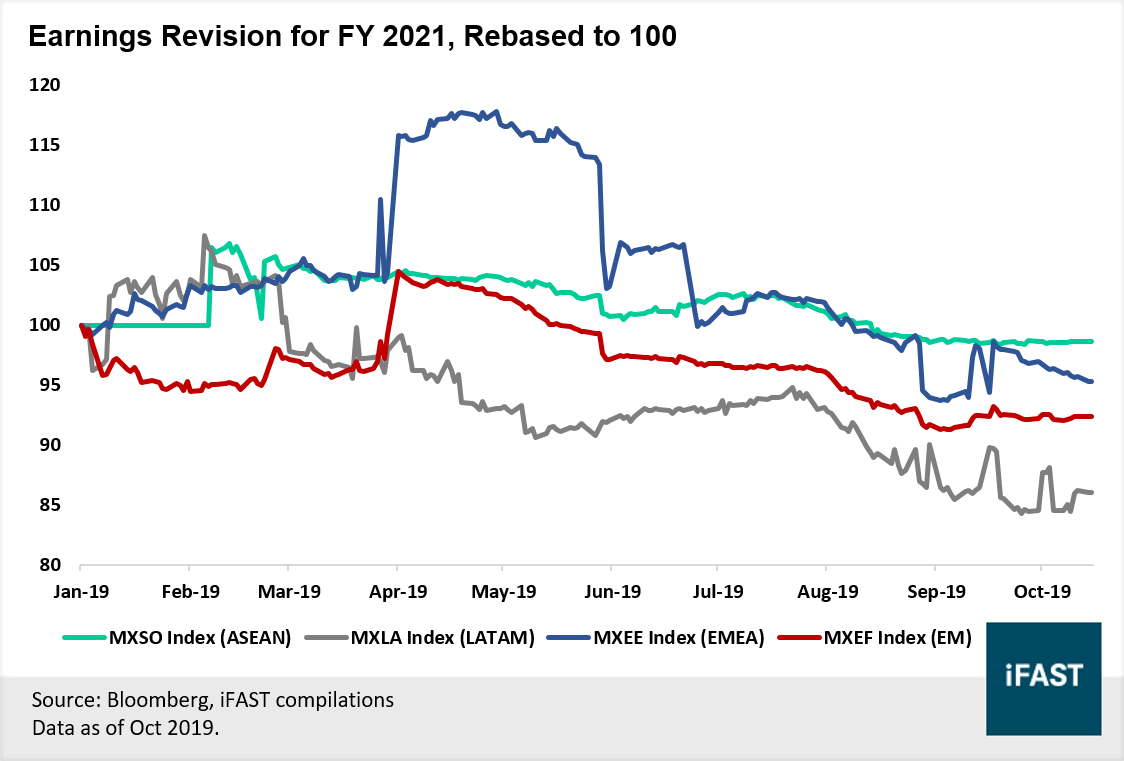
  • Emerging market has seen hefty negative revisions in the year-to-date but earnings for ASEAN equities remained resilient and has seen least revisions compared to LATAM and EMEA peers. Earnings outlook for ASEAN equities also outshined peers.

  • Valuation for ASEAN equities are not only cheaper relative to LATAM and EMEA peers, but earnings outlook remains more attractive with more positive catalysts. This bolsters the case for bargain hunting.

  • Upside potentials upwards of +10% and +18% for the next two years can be expected. It remains attractive considering the run up in ASEAN equity prices in recent years, long-term economic potential and impetus for greater upside.


The long drawn out trade fracas has finally taken some solid progress towards the much coveted resolution. While President Trump has lauded it as a breakthrough for the US, commitments have yet to be written down and signed by both parties (US and China). 

Nonetheless, this latest twist in the trade drama represents an opportune moment for emerging market equities, particularly Asian and ASEAN equities. With the shift in backdrop, ASEAN equities are in a better position to benefit as compared to their Latin America (LATAM) and emerging Europe, Middle East and Africa (EMEA) counterparts. As such, we believe ASEAN equities will be the most attractive option in the emerging market space.

In this article, we analysed ASEAN equities through the MSCI AC ASEAN index which comprised of Singapore, Thailand, Indonesia, Malaysia and the Philippines. We also remain cognisant of the comparison against other EM regions, despite the inclusion of Singapore in the index.

Semiconductor down-cycle and trade dispute suppressed ASEAN economies’ growth

Economic data and indicators have repeatedly pointed to a slowdown in China’s domestic demand. One driven by the concoction of aggressive deleveraging, economic rebalancing and the US-Sino trade conflict over the past couple of years. The demand slowdown consequently dragged trade and export value within the ASEAN region south, particularly because China is the dominant trading partner in the region (chart 1).

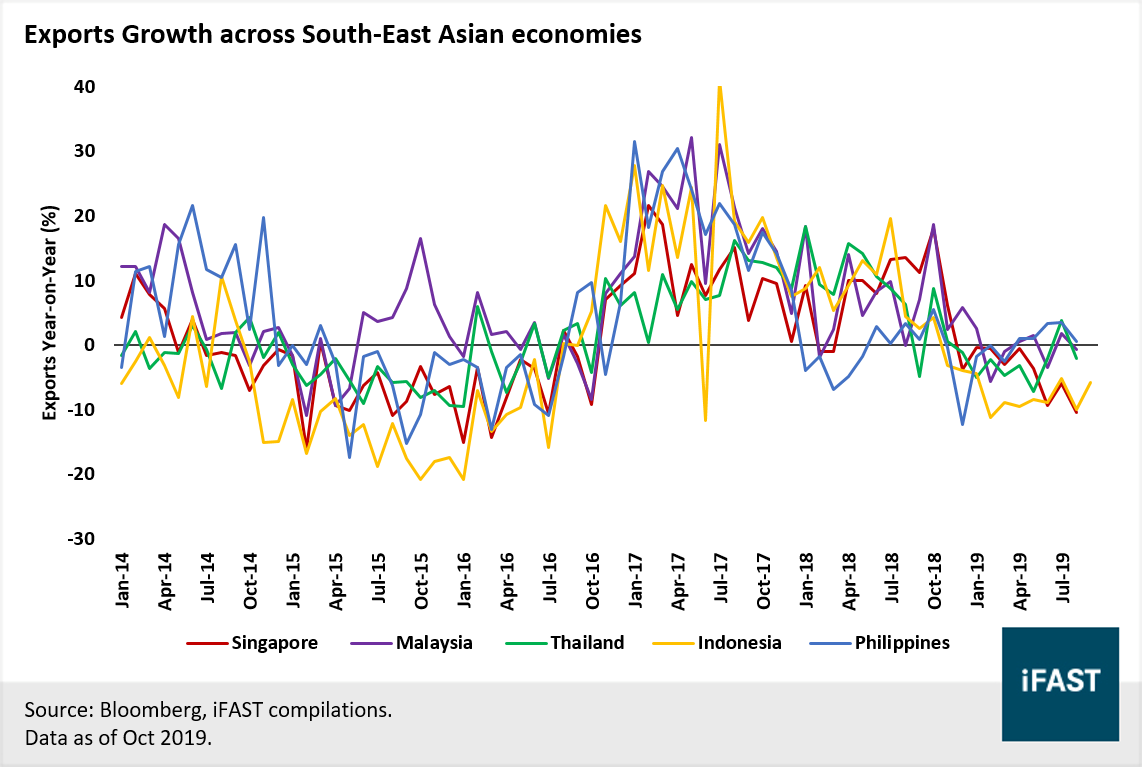
Aside from China’s significance in trade for the ASEAN region, the US comes in second in terms of export values for the respective regional economies (chart 1). Given the importance of both economic behemoths as key trading partners for the ASEAN region, the trade dispute has been a major headwind for the ASEAN economies. Therefore, following the first escalation in the US-China trade dispute last year, which suppressed import demand from the two nations, export growth across the ASEAN regions plunged into negative territory (chart 2) which dragged growth south.

The other driver factor which dragged growth down in ASEAN economies was the semiconductor down cycle. Prior to the trade dispute, the semiconductor cycle, which many Asian economies are heavily exposed to, has already started to decline as sales growth has contracted. Exacerbating the semiconductor down-cycle, the trade conflict added unnecessary pessimism and stifled China’s (one of the largest consumer and producer of electronics) demand for electronics. As such, the down turn in the semiconductor negatively influenced export growth, businesses revenues and sentiments growth in many ASEAN economies which hampered growth eventually.

Chart 1: China and US are significant trading partners for ASEAN economies
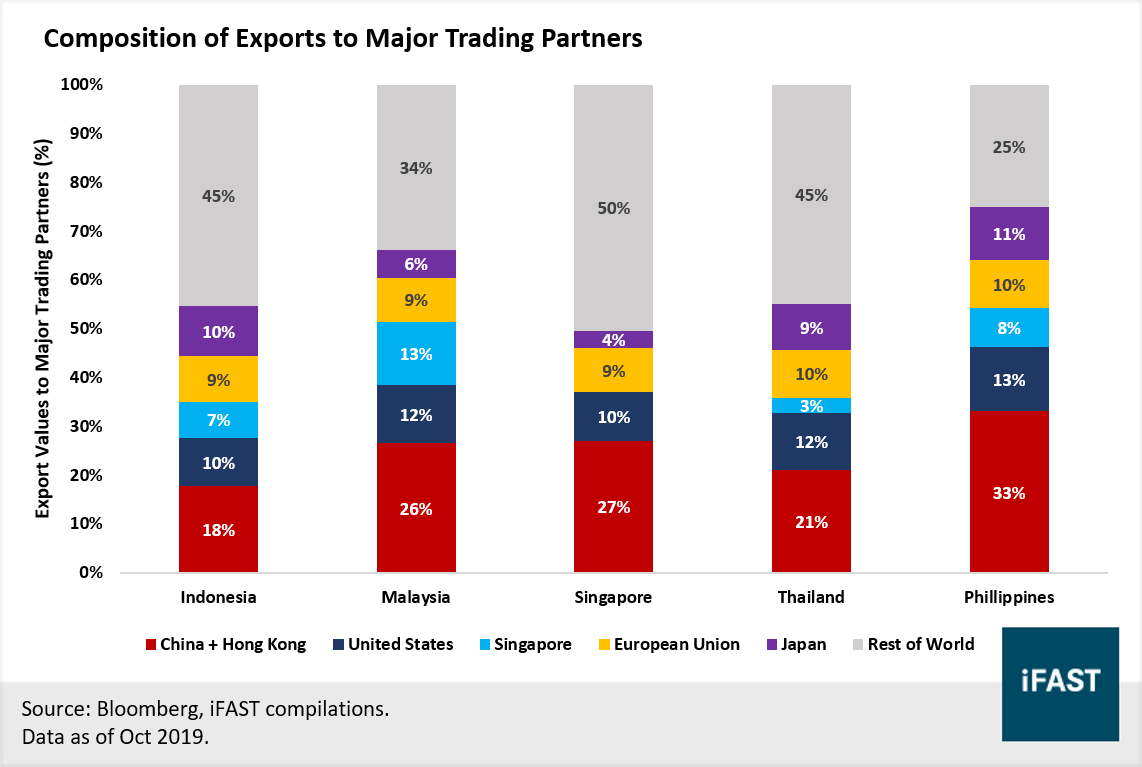


Chart 2: Exports for ASEAN economies have dipped but are showing signs of a rebound

Weakness in exports likely to end soon

In our assessment, the latest positive progress in trade talks will dissolve some market uncertainty which will uplift sentiments and confidence levels within US and China, thereby supporting their respective domestic demand. As shown throughout history, improvement in China’s domestic demand will likely lend support to exports, especially for Asian economies (positioning on semiconductor value chain and reliance on China’s import demand). 

Coupled with the impending recovery in the global semiconductor sector, which several ASEAN economies are heavily exposed to, the combined tailwinds will provide the preliminary impetus to an export recovery within the region. As such, this paints a brighter picture for the economic outlook of the region. It is also the added exposure to the global semiconductor value chain that these Asian economies had which makes them comparatively more attractive against the LATAM and EMEA economies. 

ASEAN economies primed to be one of the biggest beneficiary of the trade war


The prolonged U.S.-China trade war, along with China's rising costs and its growing focus towards the domestic economy, has shifted the global attention back to Southeast Asia. The US tariffs imposed on Chinese-made goods and components are pushing companies to re-evaluate their supply chain location strategy, since supplying US-bound goods from China will be incrementally expensive. 

Firms looking to escape US tariffs on Chinese goods as well as future trade-related uncertainties have starting to relocate production lines to South-East Asian markets like Vietnam and Thailand, where the cost of land and labour are cheaper. Furthermore, local governments are also providing tax incentives to facilitate the shift in the supply chain. 

Given ASEAN’s proximity to China and its growing domestic consumer markets, the relocation of production lines and investment diversion amid intensifying US-China trade tensions is an increasingly tempting proposition that many foreign companies will consider moving ahead. In our view, the accelerated influx of foreign investment dollars in production facility and infrastructure has and will provide a substantial boost to economic growth of the region ahead. We expect the impact to positively uplift growth in the mid to longer term.

Effects of policy supports to kick in, further boosting economic conditions 


Synchronised global central bank easing should help support and extend the economic cycles of ASEAN economies. The benefits of easier monetary conditions and substantially lower rates will likely kick in in the coming months, providing much needed support to the credit/financial conditions within the ASEAN economies. 

The global growth slowdown in 2019 emboldened policy makers throughout ASEAN to dispense a combination of fiscal and monetary stimulus. Waves of monetary easing radiated throughout the region’s economies as respective central banks slashed interest rates, taking cue from the Fed’s dovish tilt. Rate cuts ranged from three times in Indonesia, ASEAN’s largest economy, to one time in Malaysia. 

Concurrently to buttress economic growth, multiple economies including Indonesia, Thailand and Malaysia has injected fiscal stimulus in 2019. Measures such as approving new infrastructure projects and targeted tax cuts were implemented swiftly to stimulate growth. Moreover, budget for the coming years are also expansive in nature and are tailored to boost flagging domestic demand in the respective economies. 

An eventual compromise on the trade front is still the most probable outcome, as both sides (US/China) are poised to suffer from the adverse trade fallout. Nonetheless, policy support measures from China will also have an indirect impact to on ASEAN economies via bolstering the Chinese demand. 

The Chinese government has generously administered waves of fiscal and monetary stimulus including raising infrastructure activities, targeted tax cuts, RRR cuts, interest rates manipulation for financial institutions and liquidity injections. Effects of the prior mentioned policy measures are starting to kick in and this will act as tailwinds for growth for ASEAN economies.


Resiliency in earnings outshined peers 


Emerging market (EM) has seen hefty negative revisions in the year-to-date, exacerbated by the on-going trade dispute, commodities price weakness and political jitters. Similarly, the revisions have been casted on intra-regional markets such as Latin America (LATAM), emerging Europe, Middle East and Africa (EMEA) as well as ASEAN.

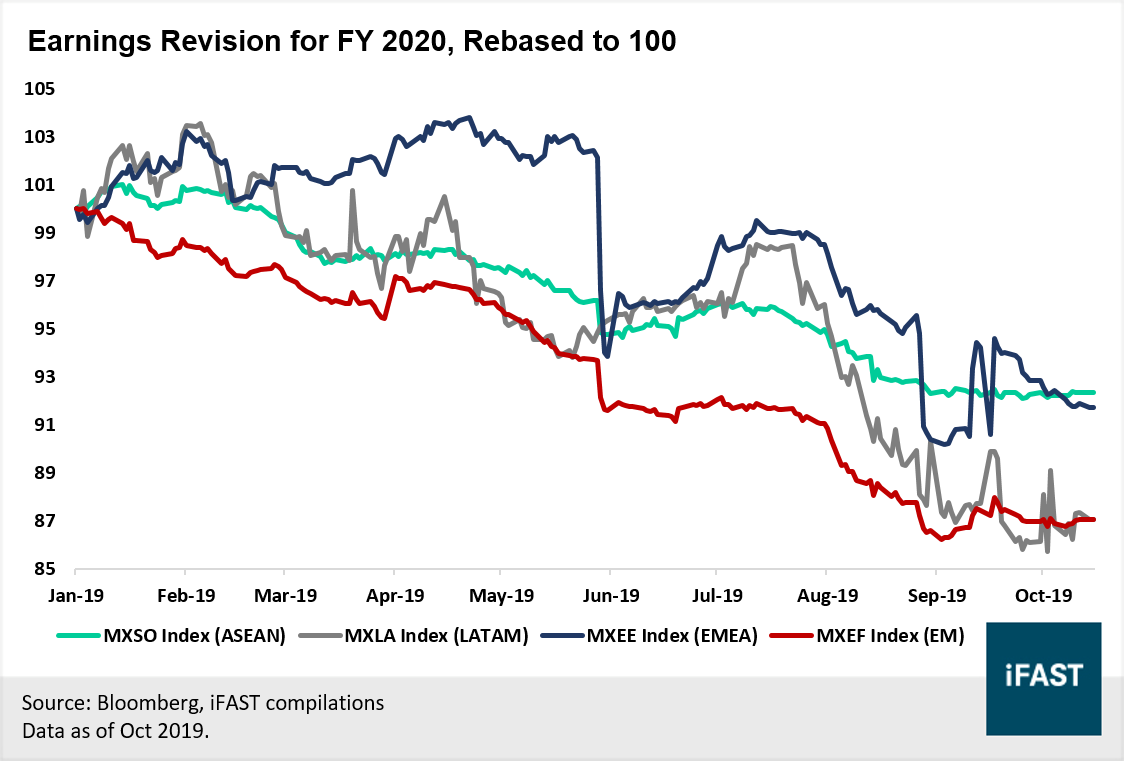
Earnings estimates for the EM companies (MSCI EM Index) have been slashed by 7% since the start of 2019 because of the uncertainty surrounding the U.S.-China trade conflict, technology companies (US-Sino tech quarrel) and decelerating global growth. Revisions bled through to the regional earnings estimates as   LATAM (MSCI LATAM index), EMEA (MSCI EM EMEA index) and ASEAN (MSCI AC ASEAN Index) has each been dealt with downwards earnings revision of -14%, -14% and -7% respectively for FY 2019 (chart 3) (as of 15 October).

A closer look at earnings revisions for the three different EM regions for the current and preceding two years (chart 4 and 5), highlights the resiliency of earnings outlook for ASEAN companies. In the current backdrop, the earnings outlook for the ASEAN region remains the most stable as revisions were significantly lesser than its peers. Furthermore, downwards revisions has displayed signs of bottoming out as compared to most of its peers, with all the three fiscal year’s earnings estimate improving.

A cardinal reason for the stability in earnings outlook for ASEAN companies vis-à-vis its LATAM and EMEA peers is the exposure to the often volatile commodity prices. There has been a strong historical relation between price movement for LATAM and EMEA equities and commodity prices (particularly oil price). The aforementioned two regions are the most sensitive regions to changes in oil prices amongst the three emerging regions. 

Comparing the breakdown of all three regional indices, the MSCI AC ASEAN index has the least exposure to the fluctuations of commodity prices, with the combined exposure to the industrials, energy and materials sectors (sectors highly exposed to commodity prices) capped at 23%. 

Conversely, the MSCI LATAM and MSCI EM EMEA index have exposures of more than 29% and 33% (as of end Spetember). As such, a short-term swing in commodity prices, often as a result of supply shocks, as easy result in hefty negative revision for earnings. 

Chart 3: Earnings for ASEAN corporates have remained resilient in FY 2019
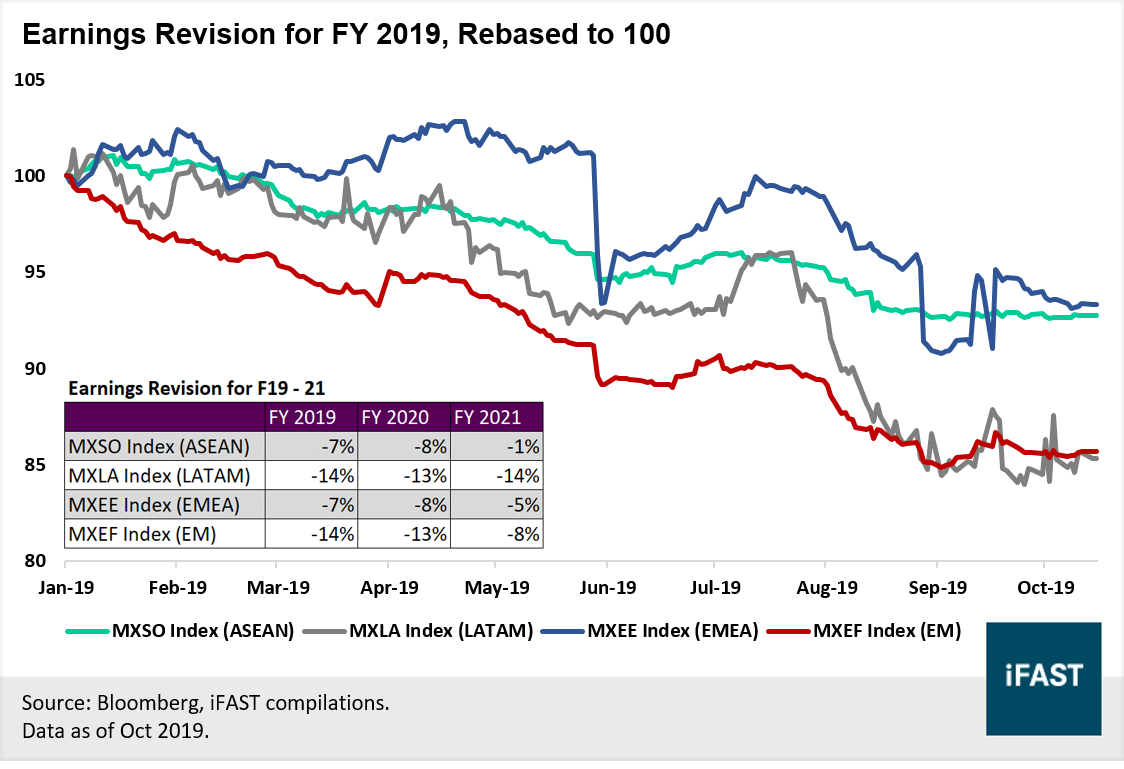

Chart 4 and 5: Earnings for ASEAN corporates showed more resilient in FY 2020 and 2021

Earnings outlook expected to improve


Across the emerging market regions, companies from EMEA and even the broader EM region continue to suffer from a contraction in sales. On the other hand, ASEAN and LATAM companies have generated top line growth, particularly for ASEAN companies, positive top line growth has been consistent since late 2017. While growth rate for sales has slowed for ASEAN companies since tariffs were implemented almost a year and a half ago, the declining rates has shown signs of bottoming out lately and in fact improved in September (chart 6).

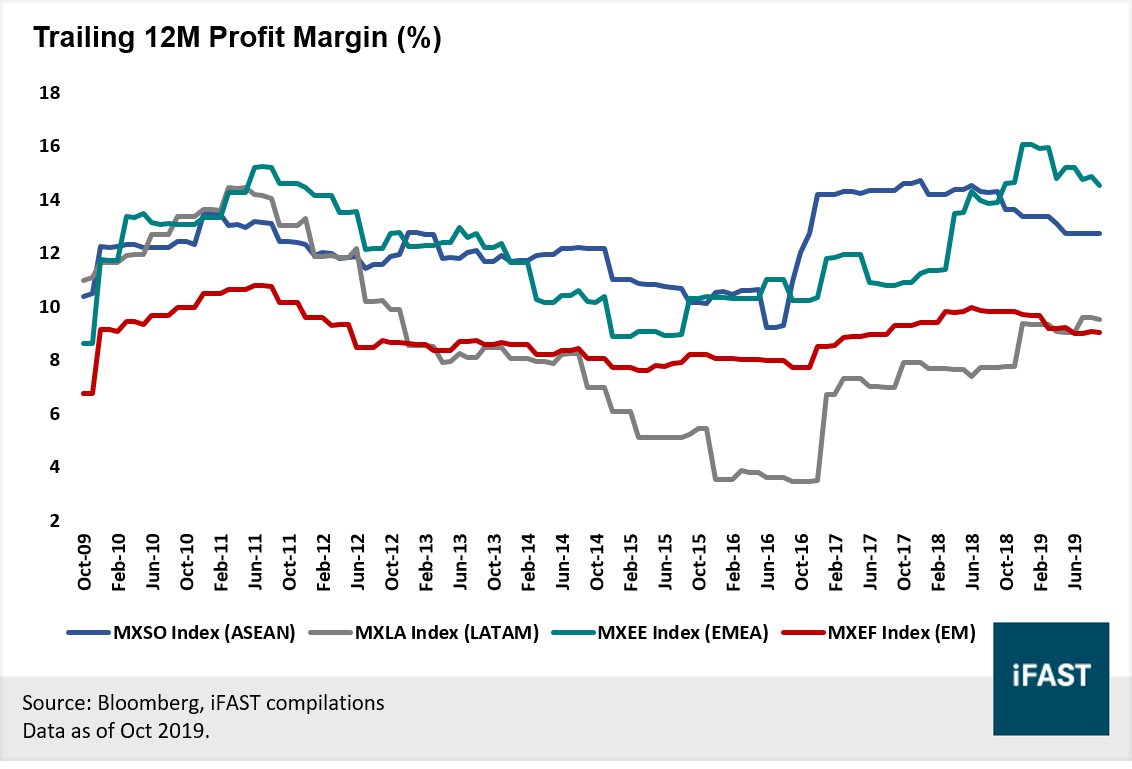
The positive sales growth for ASEAN equities is also reinforced by a stronger profit margin compared to most of the other regions. Similar to sales growth, profit margin for the ASEAN equities have ticked up in September (chart 7), displaying green shoot of rebound. The current level resides at the 65 percentile (as of 16 October) when compared across history, which strongly suggests that margins have ample room to expand when a rebound kick in. In our view, the positive tilt in trade developments coupled by an impending recovery in the global semiconductor cycle should provide the trigger for a rebound in earnings.

Chart 6: Sales growth for ASEAN equities have been comparatively better
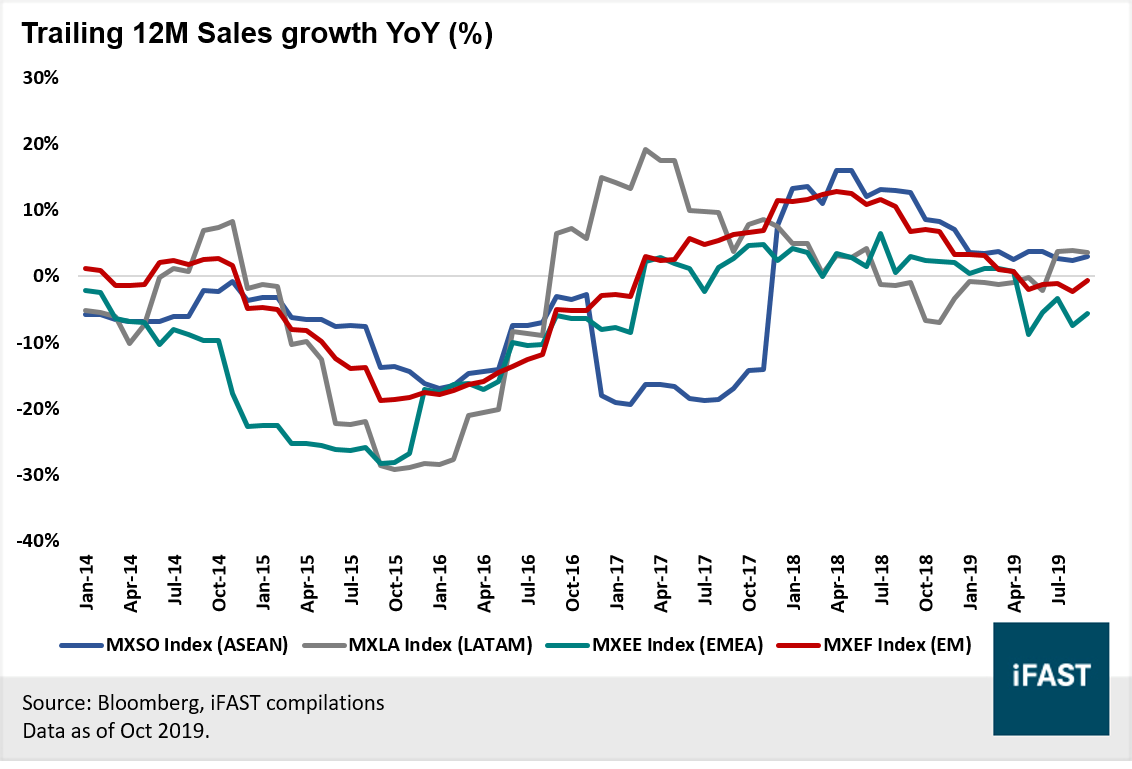


Chart 7: Robust profit margin for ASEAN equities across past 10 years


ASEAN equities a bargain hunt


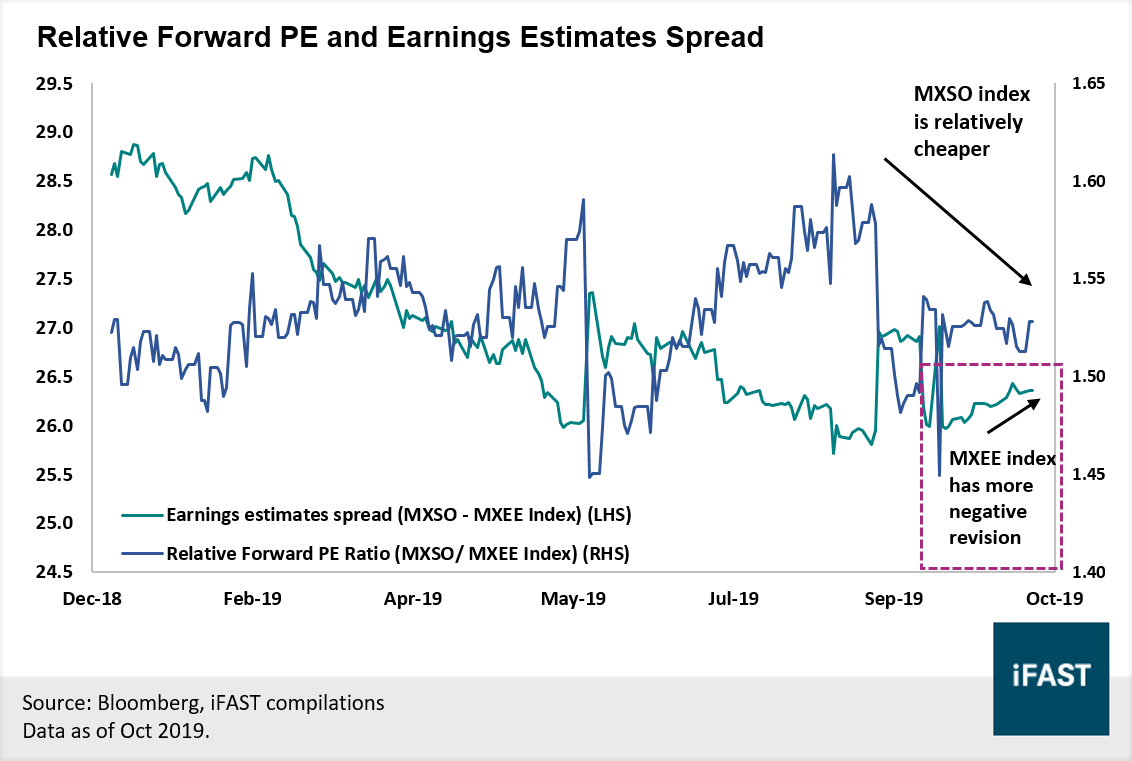
ASEAN equities have surged for the early part of 2019, on the back of positive trade developments. While that has propelled absolute valuations higher in the first half of 2019, the recent re-escalation in trade tariffs has sent the region’s equity prices back down. As such, the region’s equities are have become cheaper over the past month. Aside from a cheaper valuation, profit outlook for ASEAN equities have improved (as highlighted from prior section), which amplifies the attractiveness for the region’s equities at current price levels. 

When compared to LATAM and EMEA, the spread in estimated earnings between the two regional peers and ASEAN equities suggest that the latter has a relatively stronger earnings outlook (chart 5 & 6). This is largely attributed to the resiliency in earnings and fewer downwards earnings revision for ASEAN equities vis-à-vis its peers. From a value basis, ASEAN equities have turned cheaper relative to the other two regions. A quick look at chart 8 and 9 highlights declining levels of relative valuation when ASEAN equities are compared to LATAM and EMEA equities.

On a fundamental basis, valuation for ASEAN equities are not only cheaper relative to its peers but earnings outlook have improved and remained resilient comparatively. Overall, this bolsters the case for bargain hunting.

Chart 8: ASEAN equities relatively cheaper than LATAM equities, backed with more robust earnings
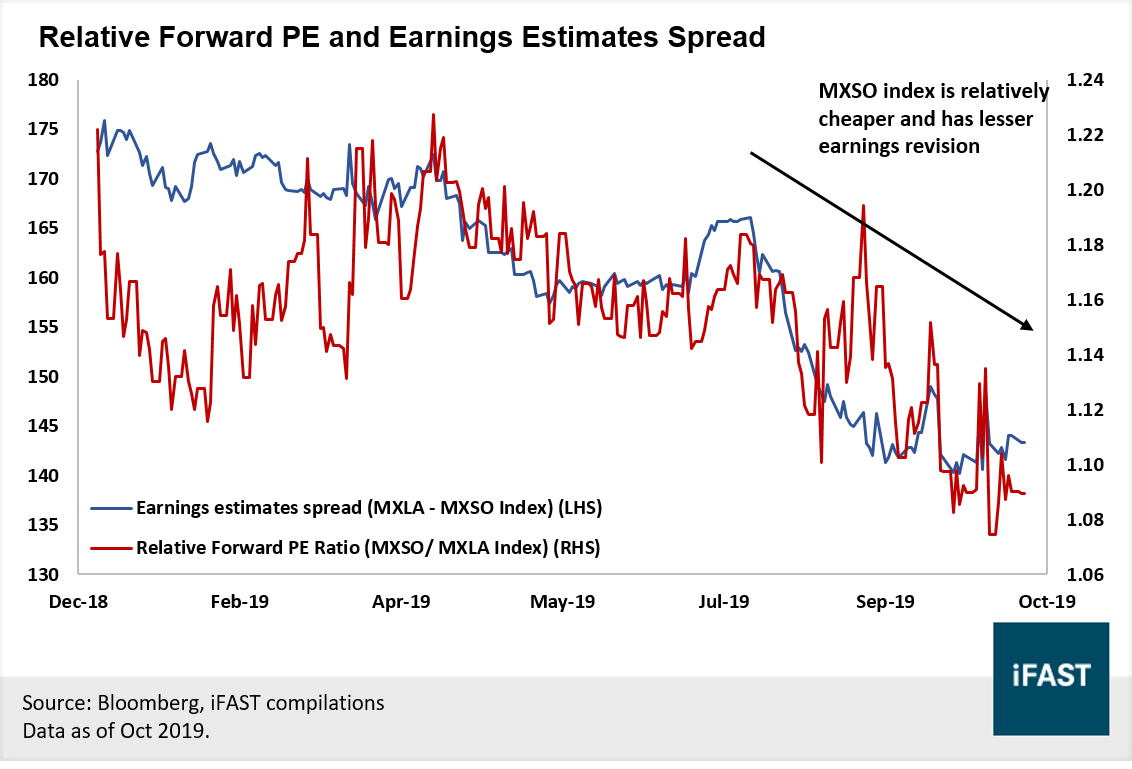


Chart 9: ASEAN equities relatively cheaper than EMEA equities, backed with more robust earnings

Valuation and Potential Upsides

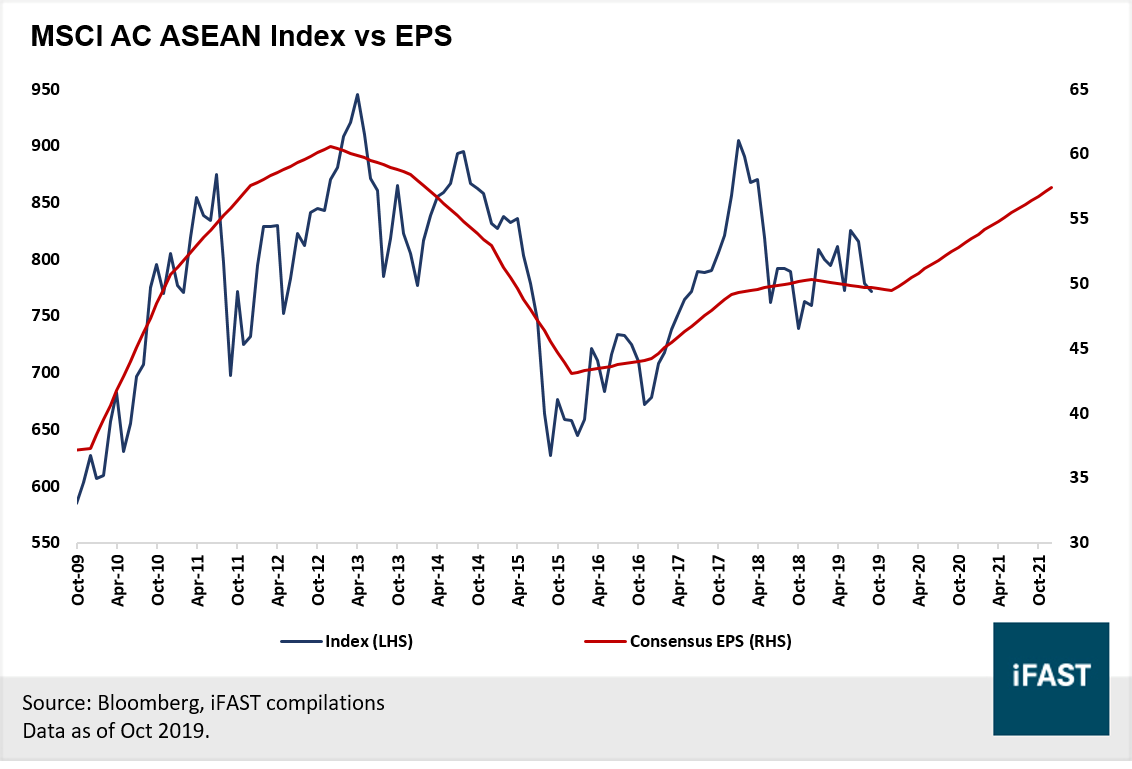
Using our target PE ratio of 16.0X on our estimated earnings for FY2020 and 2021, we expect upside potentials upwards of +10% and +18% for the next two years. Potential upsides remain attractive considering the run up in ASEAN equity prices in recent years, impetus for further upside and long-term economic potential.

Table 1: Upside Potentials of MSCI ASEAN Index into FY2020 and FY2021.

MSCI AC ASEAN Index FY2018 FY2019 FY2020 FY2021
PE Ratio (X) 15.4 15.7 14.5 13.5
Expected Earnings Growth YoY 2.3% -1.7% 8.2% 7.3%
Earnings Per Share (EPS) 50.3 49.4 53.5 57.4
Projected Fair Price
(based on Target PE of 16.0X)
- - 856 918
Potential Upside% from Today - - 10% 18%
Source: Bloomberg, iFAST estimates. Data as of Oct 2019. 

We also note the gradual uptrend of the P/E valuation in the MSCI ASEAN Index across the last ten years. In our view, the valuation expansion likely stemmed from secular growth trend of the ASEAN economies through (i) infrastructure improvements within the region and (ii) expanding middle class population backed by growing affluence and propensity to spend. 

On an absolute basis, current valuation of ASEAN Index hover near our target PE ratio of 16.0X. Nevertheless, we still believe it remains reasonable for reasons underscored in this article. From a relative perspective, valuations have turned cheaper against its EM peers while earnings outlook has improved. 

As all reasons highlighted in this article points to a strong case for bargain hunting, we believe it is opportune to build position in ASEAN equities. Therefore, Investors seeking an actively-managed fund for exposure to the ASEAN market can consider the CIMB-Principal ASEAN Total Return Fund Class SGD.

Investors who prefer a passive, lower-cost ETF option to the ASEAN equity market can consider HKEX-listed Premia Dow Jones Em ASEAN Titans 100 ETF and NYSE-listed iShares MSCI Emerging Markets Asia ETF.

Chart 10: Valuation for ASEAN equities remain at an attractive level
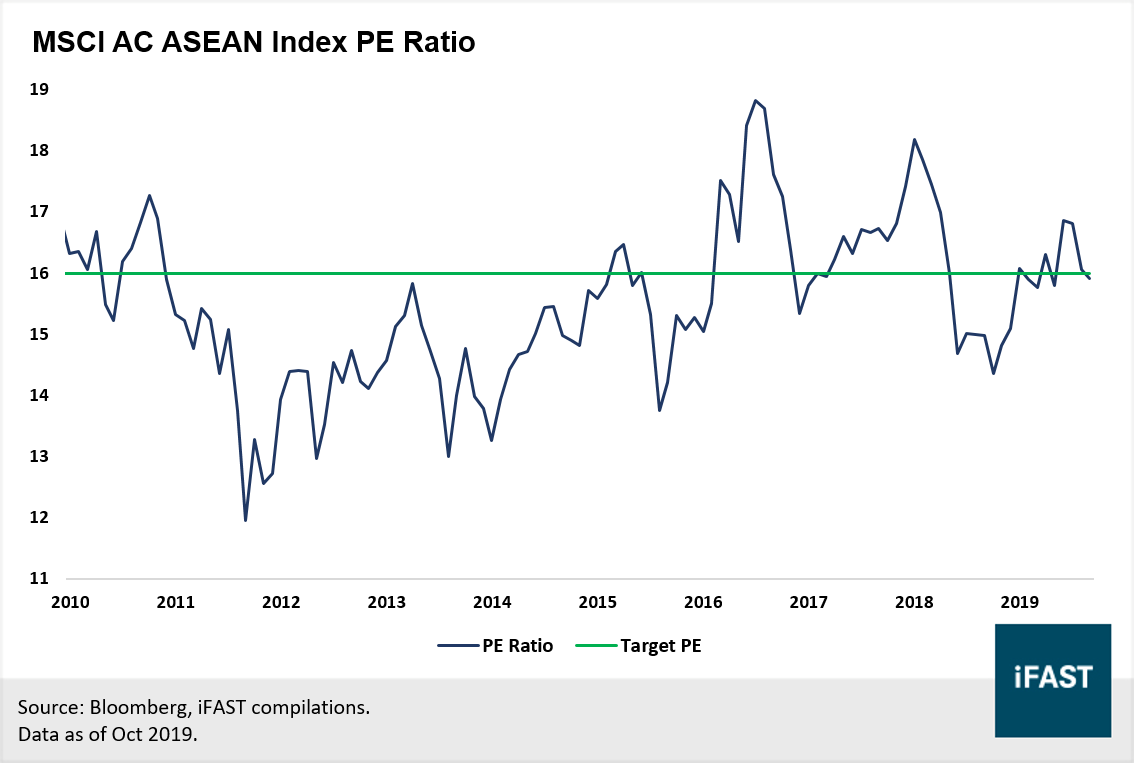


Chart 11: Earnings and index performance for ASEAN equities  


The Research Team is part of iFAST Financial Pte Ltd.      

All materials and contents found in this site are strictly for general circulation and informational purposes only and should not be considered as an offer, or solicitation, to deal in any of the funds or products found/identified in this site. While iFAST Financial Pte Ltd ("IFPL") has tried to provide accurate and timely information, there may be inadvertent delays, omissions, technical or factual inaccuracies and typographical errors. Any opinion or estimate contained in this report is made on a general basis and neither IFPL nor any of its servants or agents have given any consideration to nor have they or any of them made any investigation of the investment objective, financial situation or particular need of any user or reader, any specific person or group of persons. You should consider carefully if the products you are going to purchase are suitable for your investment objective, investment experience, risk tolerance and other personal circumstances. If you are uncertain about the suitability of the investment product, please seek advice from a financial adviser, before making a decision to purchase the investment product. Past performance is not indicative of future performance. The value of the investment products and the income from them may fall as well as rise. Opinions expressed herein are subject to change without notice. In respect of any matters arising from, or in connection with the said research analyses or research reports, recipients of the report are to contact IFPL at 10 Collyer Quay, #26-01 Ocean Financial Centre Building, Singapore 049315, or by telephone at +65 6557 2853. Where the report contains research analyses or research reports from a foreign research house and if the recipient of such research analyses or research reports is not an accredited investor, expert investor, institutional investor or an ex-accredited investor, IFPL accepts legal responsibility for the contents of such analyses or reports to such persons only to the extent as required by law. Please note that only certain security(ies) herein are available to all investors, while the rest are only available for certain persons to invest in, such as Accredited Investors (as defined in the Securities and Futures Act) or one who invests at least S$200,000 (or its equivalent currency) per transaction. To qualify as an Accredited Investor, one needs to submit a declaration form and certain relevant supporting documents, according to iFAST’s prevailing policies and procedures.

Please read our full disclaimers on the website at ( https://secure.fundsupermart.com/fsmone/policies/328125/investment-account-terms-&-conditions).

iFAST Financial Pte Ltd (IFPL) (registered address: 10 Collyer Quay #26-01 Ocean Financial Centre Singapore 049315, Telephone: 6557 2000) holds the Financial Advisers Licence issued by the Monetary Authority of Singapore ('MAS') to conduct regulated activities of advising on securities, marketing of collective investment schemes and arranging of any contract of insurance in respect of life policies, other than a contract of reinsurance and the Capital Markets Services Licence issued by the MAS to conduct regulated activities of dealing in securities and providing custodial services for securities. While IFPL has made every effort to ensure the independence of the report's contents, IFPL's nature of business is such that IFPL and its connected and associated entities together with their respective directors, officers and staff may be involved in providing dealing or investment-related services in the abovementioned securities, and have taken or may take positions in the securities mentioned in this report, and may also act as the principal for any buy or sell trades.

Ways to Invest with FSM Global
Why FSM Global
Don't have an account with us?
Open an account here
Need Financial Advice?
Make an appointment

We use cookies If you close this message or continue to use this site, you will consent to the use of Cookies, unless you choose to disable them. Click on our Privacy Policy to understand more.