


- Active management in markets like India provides the flexibility to navigate challenges and uncover growth opportunities that may be missed by the broader market.
- The RAMS Investment Unit Trust - India Equities Portfolio II A USD uses an approach known as GARP (Growth at Reasonable Price), targeting companies with strong growth potential that aren't excessively overvalued.
- The portfolio manager uses a multi-cap strategy, investing in both large caps for stability and mid and small caps for higher growth potential.
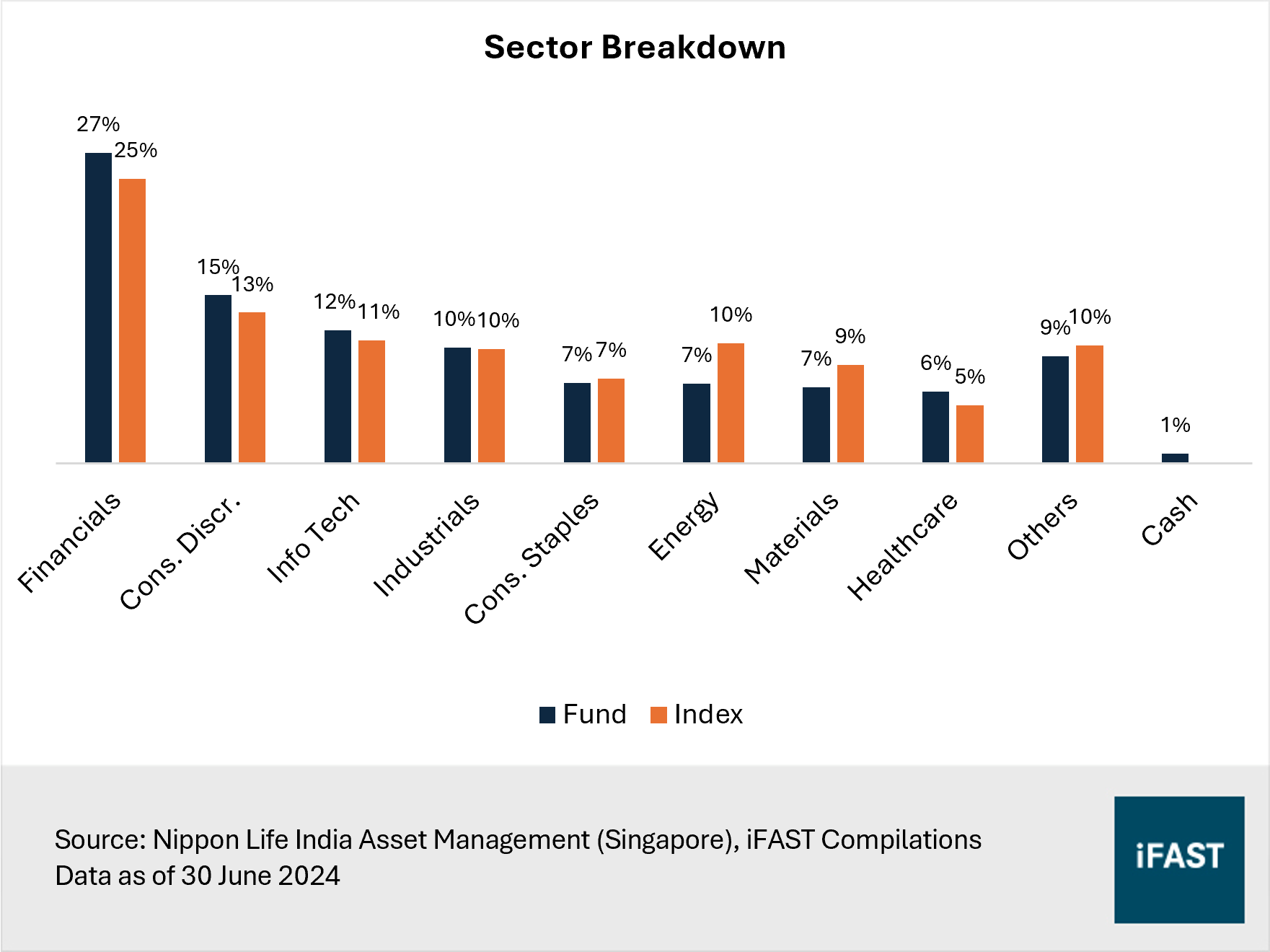
- The two heaviest sector allocations are to financials and consumer discretionary, both linked to the rising per capita income and spending power of the Indian population.
- The fund has outperformed while experiencing comparable drawdowns relative to benchmark and peers, which is a testament to its security selection.
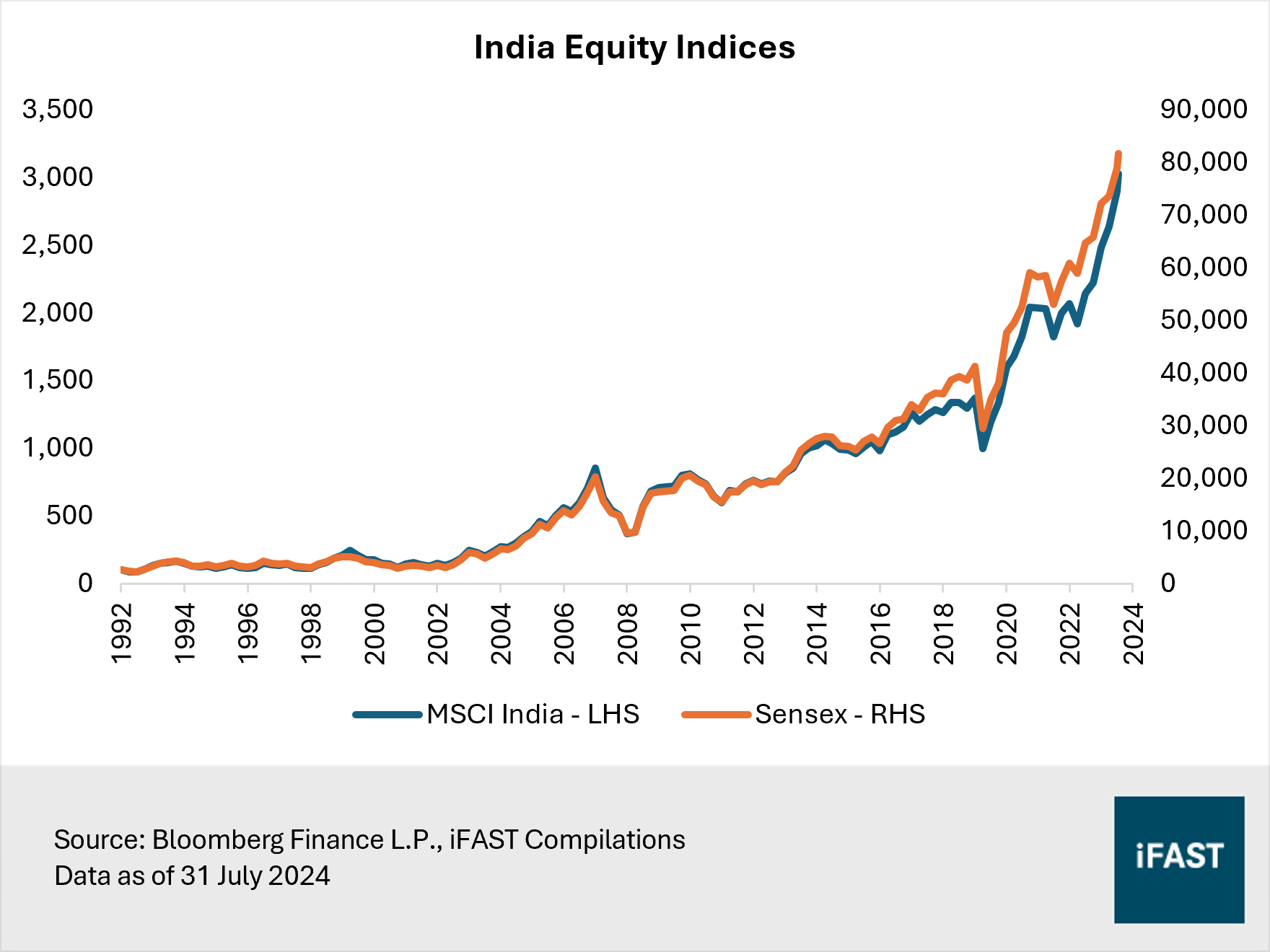
India’s GDP rose by an impressive 8.2% year-on-year in the fiscal year ended March, cementing its status as the world’s fastest-growing major economy. A robust domestic economy and optimism that Modi’s policy direction will continue in his third term as prime minister have driven a rally in the equity market. Just take a peek at indices such as the Sensex Index and the MSCI India Index which have consistently reached record highs this year (Figure 1).
Figure 1: Indian equities hit record highs
The opportunities and challenges of investing in India
There is no doubt that India presents a compelling structural growth story. Despite already being the world's most populous country, India's population is projected to continue rising and reach its peak in the early 2060s as per UN estimates. This demographic dividend promises a significant labour force and heightened consumer demand. At the same time, the strength of the middle class is expanding, bolstering purchasing power and driving consumption.
India is also seeing growth in technology and innovation. Foreign chipmakers have committed substantial investments into the country’s tech sector. A noteworthy example is Micron, backed in part by the Indian government, which is constructing a new assembly and test facility to produce the first locally manufactured semiconductor chip by the end of 2024.
However, amidst India’s promising opportunities, structural challenges loom large. Youth unemployment is alarmingly high, with the Centre for Monitoring Indian Economy (CMIE) reporting a 44.5% jobless rate for those aged 20 to 24 in the October-December quarter of 2023. Poor schooling and high drop-out rates hinder young people from acquiring the skills and jobs needed to help sustain India’s high growth and technological advancements.
Additionally, India grapples with a daunting twin deficit that threatens long-term economic stability. During the June elections, Modi’s party lost its decade-old majority. Moody's warns that Prime Minister Modi's smaller mandate raises the risk of increased populist spending, potentially leading to an expanding fiscal deficit. Meanwhile, we note that India’s persistent current account deficit continues to exert downward pressure on the rupee, amplifying economic challenges.
But despite the negatives, valuations of Indian equities remain lofty, and we believe it presents the risk of a market correction should future economic and earnings growth fall short of expectations.
In our view, investors considering investments in India should be selective. Active management offers greater flexibility to navigate challenging environments and can identify pockets of growth and value opportunities that may be overlooked by the broader market.
(Related article: Indian equities after election results: Are they a bargain now?)
RAMS India Equities Portfolio Fund II: Growth at Reasonable Price
We highlight the RAMS Investment Unit Trust - India Equities Portfolio II A USD which is managed by Mr. Sulabh Jhajharia, a portfolio manager from Nippon Life India Asset Management Limited (Singapore), one of India’s leading asset management companies, formerly known as Reliance Nippon Life Asset Management Limited.
Launched on 16 June 2017, the USD Class A share class of the fund builds on a strategy that has been in place since 2016. The fund manager uses an approach known as GARP (Growth at Reasonable Price), targeting companies with strong growth potential that aren't excessively overvalued.
A portfolio of 40-60 stocks is constructed from a vast universe of over 5,000 companies through a combination of top-down and bottom-up analysis. Key stock-picking criteria include growth and profitability, balance sheet strength, competitive advantage, and valuations. On a macro level, the portfolio manager considers factors like domestic and global growth, inflation and interest rates, as well as current account and fiscal deficit.
As of 30 June 2024, the top 10 holdings make up nearly 40% of the portfolio, comprising a diverse mix of companies across various sectors (Table 1). These include multinational conglomerate Reliance Industries, private sector banks like ICICI Bank, HDFC Bank and Axis Bank, alongside the global IT services leader Infosys.
We also observe that the fund holds mid-cap names like Zomato, an Indian multinational aggregator and food delivery company. This is because the portfolio manager employs a multi-cap strategy where large caps provide some stability, while mid and small-caps (SMID caps) offer higher growth potential and may become future leaders. On average, the portfolio maintains a 70/30 split between large caps and SMID caps. In contrast, the fund’s benchmark, MSCI India Index, primarily consists of large-cap stocks with SMID caps typically representing less than 5%.
Table 1: Top 10 holdings
|
Name |
Sector |
Weight |
|
Reliance Industries |
Energy |
6.92% |
|
ICICI Bank |
Financials |
6.16% |
|
Infosys |
Info Tech |
4.50% |
|
HDFC Bank |
Financials |
4.21% |
|
Axis Bank |
Financials |
3.34% |
|
Larsen & Toubro |
Industrials |
3.05% |
|
Zomato |
Consumer Discretionary |
3.02% |
|
Varun Beverages |
Consumer Staples |
3.00% |
|
NTPC |
Utilities |
2.96% |
|
Bharat Electronics |
Industrials |
2.60% |
|
Total |
- |
39.76% |
|
Source: Nippon Life India Asset Management (Singapore), iFAST Compilations Data as of 30 June 2024 |
||
Riding on India’s rising purchasing power
On a sectoral level, the two heaviest allocations are to financials and consumer discretionary, both slightly overweight compared to the benchmark (Figure 2). These sectors are favoured as they are linked to the rising per capita income and spending power of the Indian population.
For instance, rising income typically leads to stronger loan growth and fee income from wealth management for banks. In the quarter ended 31 March 2024, Indian banks saw robust growth in earnings. The largest private sector lender HDFC Bank reported 37.1% year-on-year increase in net profits, with non-interest income more than doubling. ICICI Bank, India's second-largest private lender, also reported a 17.4% year-on-year increase in net profit, supported by robust loan growth.
Conversely, the fund’s biggest underweights are in the energy and materials sectors, though by only 2-3%. The shift towards energy transition is seen as a compelling long-term strategic theme, particularly benefiting electric vehicles (EVs) and renewable energy producers.
Figure 2: Financials and consumer discretionary are the largest sectors
One of the best-performing India equity funds on our platform
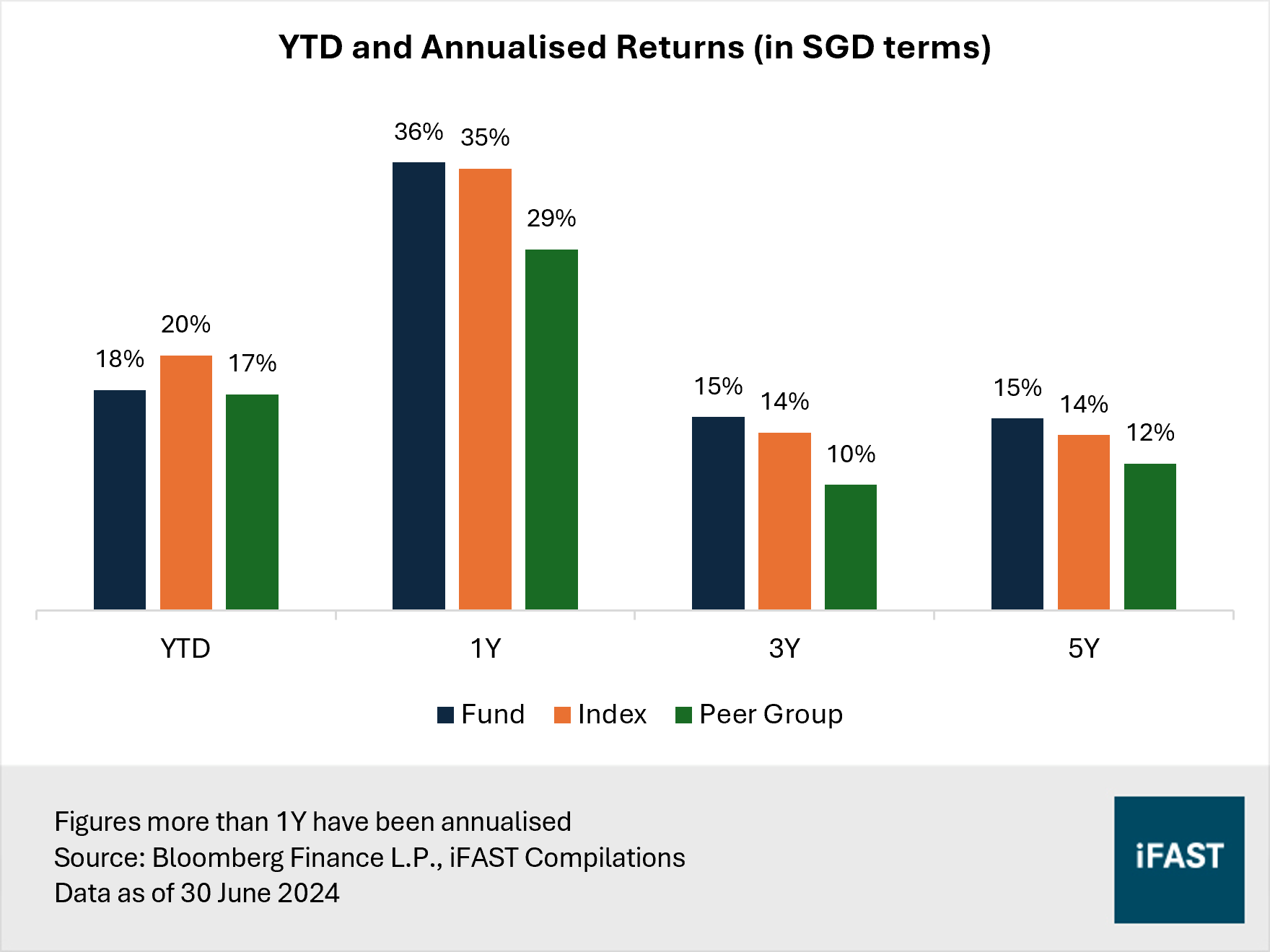
Across the one, three, and five-year periods, the RAMS Investment Unit Trust - India Equities Portfolio II A USD has consistently outperformed its benchmark and other Indian equity funds on our platform (Figure 3). Looking deeper, this strong performance was due to the fund’s impressive returns across most calendar years.
Figure 3: The fund has delivered stellar performance
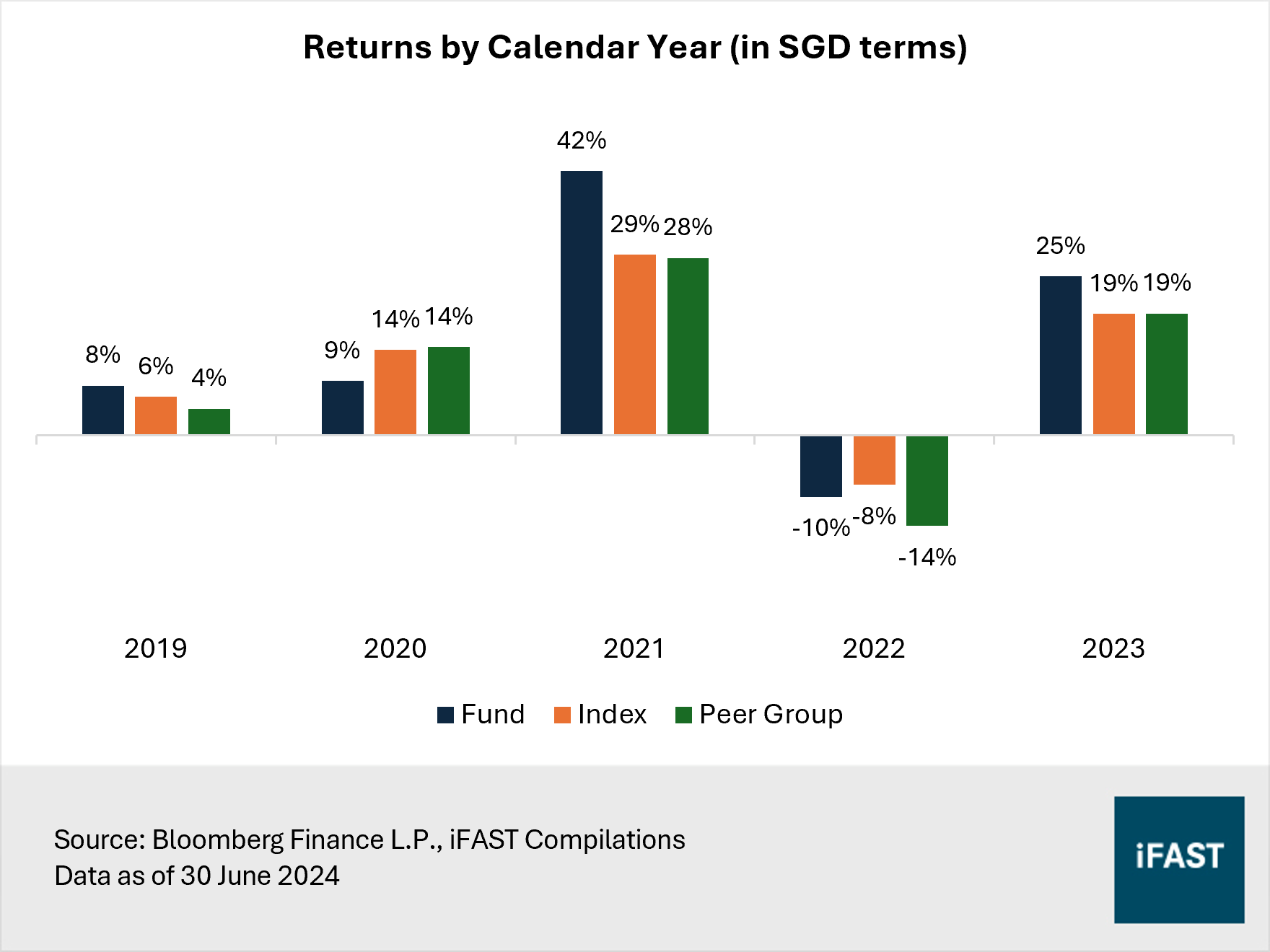
In 2021, the fund delivered exceptional performance. It posted robust returns of 42%, far outpacing its benchmark and peers (Figure 4; all returns in SGD terms, unless otherwise stated). This surge coincided with India's robust stock market recovery from the Covid-19 pandemic and a shift in foreign investor interest from China to India. SMID stocks notably outperformed their large-cap counterparts.
2023 was also a great year for the fund, driven largely by its holdings in SMID caps. On a security level, key contributors include Supreme Industries, a leading player in India's plastics processing sector, CreditAccess Grameen, a prominent microfinance institution, and Tejas Networks, which specialises in telecommunications and networking solutions. To date, the fund has continued to hold on to most of these names due to a strong growth trajectory.
Figure 4: Outperformance in most calendar years
Another point worth highlighting is that the fund does not own shares of Adani Group’s companies, representing underweight positions compared to its benchmark. This decision turned out well for the fund as Adani Group stocks suffered great losses in early 2023. The losses came after Hindenburg Research, a US-based short-seller, accused the Adani Group of stock manipulation, accounting fraud, and the misuse of tax havens.
Despite the fund’s higher allocation to SMID caps, its five-year maximum drawdown (-38%) remains on par with benchmark (-38%) and peers (-37%). This suggests an effective risk management. Overall, we believe the fund’s outperformance and comparable drawdowns are a testament to its investment strategy and security selection.
Final thoughts
In a nutshell, amidst record highs for Indian equities, active management is key to identifying pockets of opportunity. The RAMS Investment Unit Trust - India Equities Portfolio II A USD stands out with its solid performance track record. It focuses on companies with strong growth potential that are not excessively overvalued. Moreover, the fund’s multi-cap strategy effectively captures the higher growth potential of SMID caps which are typically underrepresented in benchmarks like the MSCI India Index. With significant allocations in sectors like financials and consumer discretionary, the fund positions investors to benefit from India’s robust secular growth trends.
All materials and contents found in this site are strictly for general circulation and informational purposes only and should not be considered as an offer, or solicitation, to deal in any of the funds or products found/identified in this site. While iFAST Financial Pte Ltd ("IFPL") has tried to provide accurate and timely information, there may be inadvertent delays, omissions, technical or factual inaccuracies and typographical errors. Any opinion or estimate contained in this report is made on a general basis and neither IFPL nor any of its servants or agents have given any consideration to nor have they or any of them made any investigation of the investment objective, financial situation or particular need of any user or reader, any specific person or group of persons. You should consider carefully if the products you are going to purchase are suitable for your investment objective, investment experience, risk tolerance and other personal circumstances. If you are uncertain about the suitability of the investment product, please seek advice from a financial adviser, before making a decision to purchase the investment product. Past performance is not indicative of future performance. The value of the investment products and the income from them may fall as well as rise. Opinions expressed herein are subject to change without notice. In respect of any matters arising from, or in connection with the said research analyses or research reports, recipients of the report are to contact IFPL at 10 Collyer Quay, #26-01 Ocean Financial Centre Building, Singapore 049315, or by telephone at +65 6557 2853. Where the report contains research analyses or research reports from a foreign research house and if the recipient of such research analyses or research reports is not an accredited investor, expert investor, institutional investor or an ex-accredited investor, IFPL accepts legal responsibility for the contents of such analyses or reports to such persons only to the extent as required by law. Please note that only certain security(ies) herein are available to all investors, while the rest are only available for certain persons to invest in, such as Accredited Investors (as defined in the Securities and Futures Act) or one who invests at least S$200,000 (or its equivalent currency) per transaction. To qualify as an Accredited Investor, one needs to submit a declaration form and certain relevant supporting documents, according to iFAST’s prevailing policies and procedures.
Please read our full disclaimers on the website at ( https://secure.fundsupermart.com/fsmone/policies/328125/investment-account-terms-&-conditions).
iFAST Financial Pte Ltd (IFPL) (registered address: 10 Collyer Quay #26-01 Ocean Financial Centre Singapore 049315, Telephone: 6557 2000) holds the Financial Advisers Licence issued by the Monetary Authority of Singapore ('MAS') to conduct regulated activities of advising on securities, marketing of collective investment schemes and arranging of any contract of insurance in respect of life policies, other than a contract of reinsurance and the Capital Markets Services Licence issued by the MAS to conduct regulated activities of dealing in securities and providing custodial services for securities. While IFPL has made every effort to ensure the independence of the report's contents, IFPL's nature of business is such that IFPL and its connected and associated entities together with their respective directors, officers and staff may be involved in providing dealing or investment-related services in the abovementioned securities, and have taken or may take positions in the securities mentioned in this report, and may also act as the principal for any buy or sell trades.