

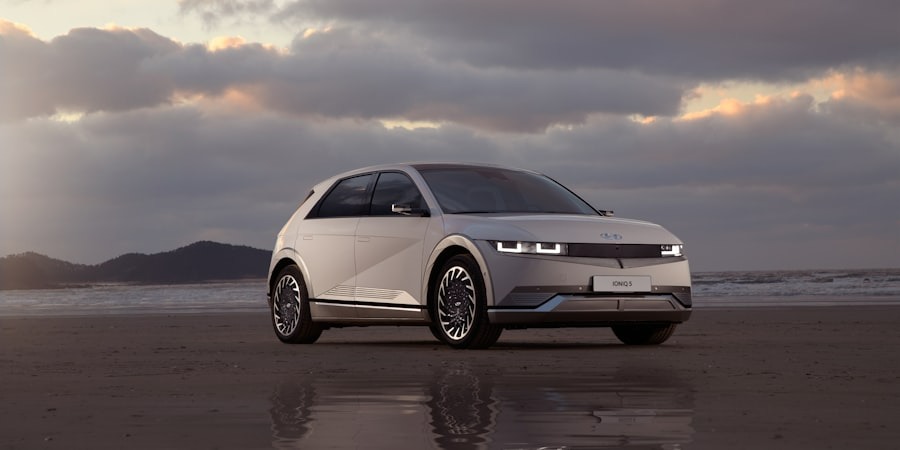
- The European Commission will impose additional provisional duties on Chinese battery electric vehicles starting 4 July 2024. Chinese EV makers will face tariffs ranging from 17.4% to 38.1%.
- The tariff hike was made for three key reasons: (1) to reduce the cost advantage Chinese EV makers have over their European counterparts, (2) to encourage automakers to shift their production plants to overseas locations, preferably Europe, and (3) to balance the differing opinions among EU member states.
- High tariffs could hinder China’s efforts to establish brand recognition and acquire market share in the EU and the US. This could impact China’s overall position in the global new energy vehicle market and affect its technological competitiveness and economic growth.
- We recommend that investors maintain an underweight position in China within their portfolios and instead allocate capital to markets with more promising returns, such as the 'New Asian Tigers'.
The European Commission announced that it will impose additional provisional duties of up to 38.1% on Chinese battery electric vehicles (BEVs) starting 4 July 2024. This decision was disclosed on 12 June 2024, less than a month after the US announced its tariff hike.
According to the press release, SAIC Motor will face the highest additional tariff of 38.1% among the sampled Chinese producers. Meanwhile, other producers will encounter tariffs ranging from 17.4% to 38.1% (Table 1). These measures are in addition to the existing 10% import duty.
Table 1: Tariffs on China-made BEVs
|
Battery Electric Vehicle Producers in China |
Additional Tariff |
|
BYD |
17.4% |
|
Geely |
20.0% |
|
SAIC |
38.1% |
|
Tesla* |
To be released |
|
Other BEV Producers: who cooperated in the investigation but not sampled |
21.0% |
|
Other BEV Producers: who did not cooperate in the investigation |
38.1% |
|
Source: European Commission, iFAST compilations. Data as of 12 June 2024. |
*Note: Tesla requested a substantiated investigation, and its duty rate will be calculated individually based on the findings of that investigation.
Automakers universally oppose EU tariffs on Chinese EVs
The recent tariff rule appears to target SAIC Motor due to the automaker’s robust presence in Europe, which surpasses that of BYD and Geely. In 2023, SAIC exported a staggering 12.1 million cars, accounting for nearly a quarter of China’s total automobile exports, with Europe as its primary export destination. Notably, SAIC’s subsidiary brand, MG, emerged as one of the top-selling battery electric vehicles (BEVs) in the European Union (EU) in 2023.
Beyond impacting Chinese automakers, this tariff imposition will also adversely affect Western automakers that manufacture their EVs in China and sell them in Europe. Prominent BEV models, including the Tesla Model Y, BMW iX3, and Volkswagen ID.3, are produced in China and will now face a substantial 21% increase in costs due to the new trade policy. Consequently, European automakers such as BMW, Volkswagen, and Mercedes, have publicly voiced their opposition to the new tariff.
The EU's decision, albeit met with mixed reactions, was driven by several factors. Firstly, it aims to level the playing field for European BEV producers by reducing the roughly 30% cost advantage of Chinese-made BEVs. Secondly, it encourages automakers to relocate production to Europe, fostering a robust EV supply chain and enhancing the region's employment situation and economy growth. Lastly, the tariff decision reflects a delicate balance among EU member states, with France and Spain advocating for a higher tariff while Germany opposed it. As a result, the imposed tariff strikes a moderate compromise, differing from the more aggressive stance in the US.
The ramifications on China will be significant
The EU's tariff, though lower than the US, could have significant ramifications. In 2023, 38.7% of China’s total EV exports by volume went to the Eurozone, with an additional 9.45% directed to the UK, significantly higher than its exports to the US. This tariff might prompt some Chinese automakers to exit European markets due to lost cost advantages, hampering their EU market penetration.
On a national level, high tariffs could directly reduce China’s EV exports, given the price elasticity of demand for EVs. Although in 2023, EV exports constituted only 1% of China’s total export value, the sector’s long-term growth rate remains significant. Since 2009, China has provided supportive subsidies to the EV industry, resulting in the flourishing of Chinese EV brands and the establishment of a mature EV supply chain within China.
Amidst China’s property market struggles, the EV sector remains a high-potential economic growth driver during the global transition toward a low-carbon economy. However, high tariffs from the US and the EU could hinder China’s efforts to gain market share and brand recognition in these critical automobile markets. Consequently, these tariffs may impact China’s overall position in the global new energy vehicle market, reducing its technological competitiveness and economic growth.
China's EV industry faces a landscape rife with challenges
Despite the current situation, there remains room for negotiations. The European Commission is in talks with Chinese authorities to address findings and seek resolutions. If discussions fail to yield an effective solution, provisional duties will take effect from 4 July 2024. The specific form of these duties will be determined by customs in each EU member state. Notably, tariffs will only be collected during the investigation if definitive duties are imposed in November.
In a worst-case scenario where definitive duties are levied on Chinese EVs, China will probably respond with countermeasures. Anti-dumping investigations into imports of pork and liquor products had begun earlier this year. Furthermore, China has threatened to impose 25% tariffs on cars equipped with large engines from the EU and the US. This move could adversely affect automakers such as BMW and Mercedes, which heavily rely on China for sales.
In summary, it seems improbable that the EU will remove tariffs on Chinese EVs post-discussions. These elevated tariffs are set to disrupt China's EV supply chain, prompting some producers to contemplate shifting production abroad. BYD, for instance, has begun constructing new factories like the one in Hungary. However, not all automakers can promptly establish new facilities and adapt their supply chains. Political, labour, and environmental factors pose challenges to overseas facility construction, as evidenced by Tesla's struggles with its Gigafactory in Europe.
Looking ahead, Chinese EVs and China itself will face numerous challenges. These developments could exert additional pressure on China’s economic growth, particularly amidst sluggish internal demand. Consequently, we recommend that investors maintain an underweight position in China within their portfolios and instead allocate capital to markets with more promising returns, such as the ‘New Asian Tigers’ - Japan, South Korea, and Singapore.
Table 2: Recommended products for “New Asian Tigers”
|
Countries |
Unit Trusts |
ETFs |
|
Singapore |
||
|
Japan |
||
|
South Korea |
Declaration:
For specific disclosure, at the time of publication of this report, IFPL (via its connected and associated entities) and the analyst who produced this report hold a NIL position in the abovementioned securities.
All materials and contents found in this site are strictly for general circulation and informational purposes only and should not be considered as an offer, or solicitation, to deal in any of the funds or products found/identified in this site. While iFAST Financial Pte Ltd ("IFPL") has tried to provide accurate and timely information, there may be inadvertent delays, omissions, technical or factual inaccuracies and typographical errors. Any opinion or estimate contained in this report is made on a general basis and neither IFPL nor any of its servants or agents have given any consideration to nor have they or any of them made any investigation of the investment objective, financial situation or particular need of any user or reader, any specific person or group of persons. You should consider carefully if the products you are going to purchase are suitable for your investment objective, investment experience, risk tolerance and other personal circumstances. If you are uncertain about the suitability of the investment product, please seek advice from a financial adviser, before making a decision to purchase the investment product. Past performance is not indicative of future performance. The value of the investment products and the income from them may fall as well as rise. Opinions expressed herein are subject to change without notice. In respect of any matters arising from, or in connection with the said research analyses or research reports, recipients of the report are to contact IFPL at 10 Collyer Quay, #26-01 Ocean Financial Centre Building, Singapore 049315, or by telephone at +65 6557 2853. Where the report contains research analyses or research reports from a foreign research house and if the recipient of such research analyses or research reports is not an accredited investor, expert investor, institutional investor or an ex-accredited investor, IFPL accepts legal responsibility for the contents of such analyses or reports to such persons only to the extent as required by law. Please note that only certain security(ies) herein are available to all investors, while the rest are only available for certain persons to invest in, such as Accredited Investors (as defined in the Securities and Futures Act) or one who invests at least S$200,000 (or its equivalent currency) per transaction. To qualify as an Accredited Investor, one needs to submit a declaration form and certain relevant supporting documents, according to iFAST’s prevailing policies and procedures.
Please read our full disclaimers on the website at ( https://secure.fundsupermart.com/fsmone/policies/328125/investment-account-terms-&-conditions).
iFAST Financial Pte Ltd (IFPL) (registered address: 10 Collyer Quay #26-01 Ocean Financial Centre Singapore 049315, Telephone: 6557 2000) holds the Financial Advisers Licence issued by the Monetary Authority of Singapore ('MAS') to conduct regulated activities of advising on securities, marketing of collective investment schemes and arranging of any contract of insurance in respect of life policies, other than a contract of reinsurance and the Capital Markets Services Licence issued by the MAS to conduct regulated activities of dealing in securities and providing custodial services for securities. While IFPL has made every effort to ensure the independence of the report's contents, IFPL's nature of business is such that IFPL and its connected and associated entities together with their respective directors, officers and staff may be involved in providing dealing or investment-related services in the abovementioned securities, and have taken or may take positions in the securities mentioned in this report, and may also act as the principal for any buy or sell trades.