

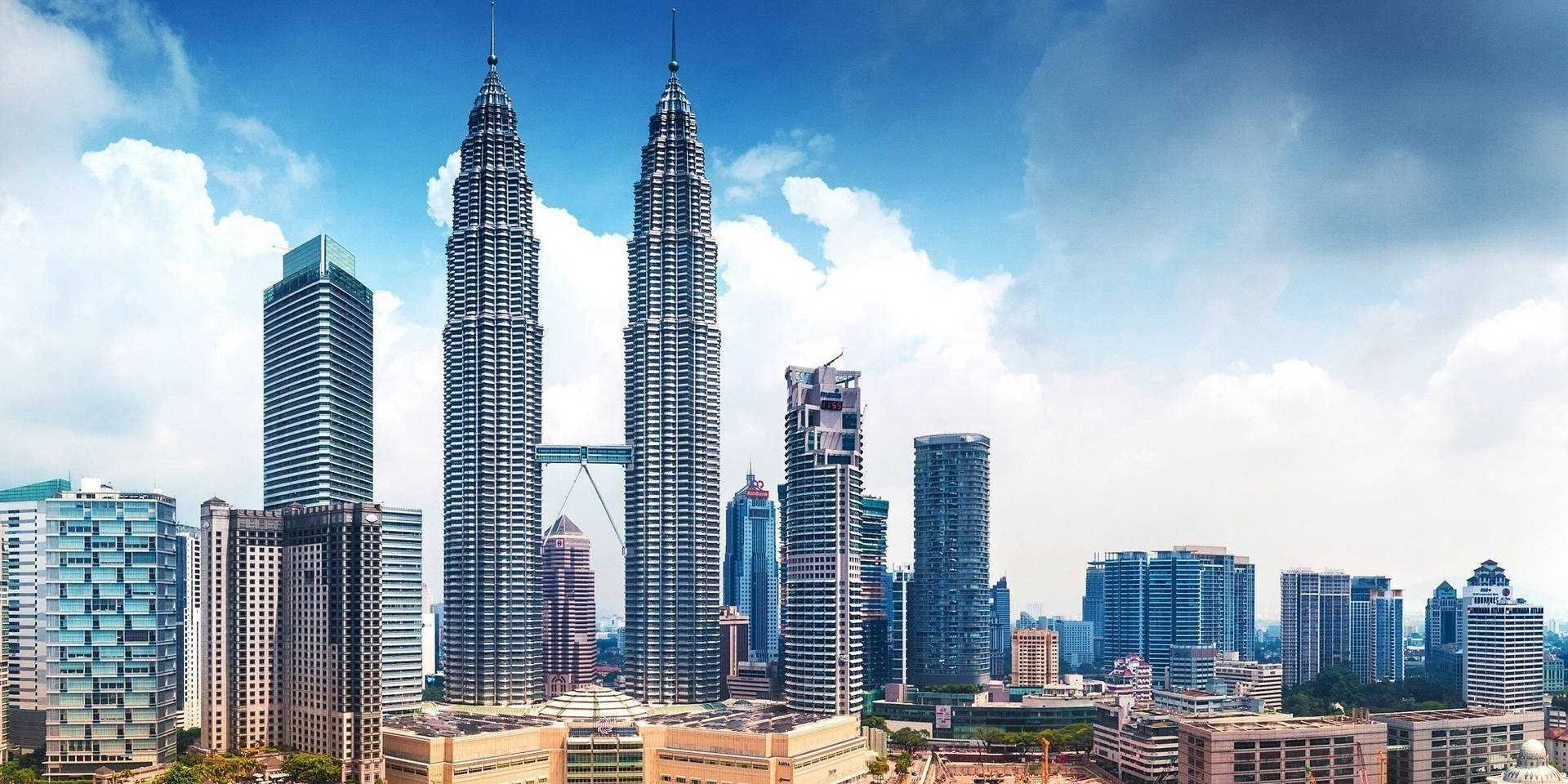
- Our GDP forecast hovers around 4%-5% YoY.
- We project that BNM will maintain its policy rate at 3.0% throughout 2024.
- Malaysia’s BOP is supported by higher exports in Electrical & Electronic spaces, and our expectations of commodity prices staying elevated, subsequently driving the appreciation of the Ringgit.
- We envisage 2024 will be the year of ‘implementation’ after multiple major announcements, including economic masterplans and the Fiscal Responsibility Act (FRA) in 2023.
- Overall, our outlook on Malaysia remains optimistic. The resilience of the Malaysian economy, coupled with ongoing strategic initiatives and promising investment inflows, could inspire confidence.
As of 6 December 2023, FBMKLCI was down -3.3% in terms of price index but marginally gained by 0.7% in total return in 2023 (Figure 1).
Figure 1: Malaysia's Bourses Performance In 2023

Maintain GDP Forecast At 4%-5% YoY Growth
Malaysia’s GDP appears poised for healthy growth in 2024. Macro uncertainties, such as recessionary fears and a slowdown in China, one of Malaysia’s top trading partners, might weigh on global demand and potentially affect Malaysia’s exports. In addition, the Malaysian government is reducing expenditure to achieve the targeted deficit of 3.5% in 2025. The silver lining remains the still-resilient growth in private consumption, serving as the bottom line of the economy. The rollout of infrastructure projects may also foster positive ripple effects in various sectors, presenting a beacon of hope for economic revitalisation.
Regarding monetary policies, the central bank is anticipated to maintain interest rates at their current levels. This decision aims to strike a delicate equilibrium between fostering economic growth and upholding price stability, particularly in the face of challenges such as food supply disruptions from El Nino and the restructuring of subsidy mechanisms.
Overall, we maintain our GDP forecast to hover around 4-5% YoY growth in the next 2 years, slightly lower than the government’s consensus of 5-6% YoY.
Anticipate OPR To Pause At 3% In 2024
Malaysia’s inflation looks set to stabilise near 2%, having decelerated from the August 2022 peak of 4.7%, thanks to the favourable base effect for food and food costs, which soared last year. Also, the price increases for core goods and services appear to have peaked, reflecting the satiation of pent-up demand from the pandemic and reduced spending power due to the higher cost of living.
In November, Bank Negara Malaysia (BNM) chose to prolong its pause, signalling the conclusion of its tightening phase in 2023. We believe this shift from raising rates in 2022 to a recent pause suggests that the policy rate has likely reached its peak in this cycle - a prudent move in anticipation of a potential decline in global demand. In a nutshell, we project that BNM will maintain its policy rate at 3.0% throughout 2024.
Positive on Electrical & Electronic Exports To Serve As A Growth Driver
On the other hand, Malaysia’s Balance of Payment (BOP) has been showing surpluses over the course of many years. This year, the BOP was largely supported by elevated commodity prices, including crude palm oil and petroleum-related products, which constitute approximately 22% of total exports. Semiconductor exports have been declining in recent quarters, dragged down by lower demand across the world.
Yet, we opine a pivotal moment is set to happen in the global semiconductor space after a year of depression in chips. With our assumption of global chip sales to grow by 40% YoY by 2Q25, owing to the structural increase in demand from increasing digitalisation, Malaysia’s BOP could continue to be supported by the higher exports in electrical & electronic spaces (approx. 36% of Malaysia’s) (Figure 2) and our expectations of commodity prices staying elevated, subsequently driving the appreciation of Ringgit.
Figure 2: Commodity Exports Largely Supported Malaysia’s BOP

Fiscal Policies On The Right Track, Awaiting The Growth Momentum To Materialise
The Unity Government, led by Prime Minister Anwar Ibrahim, now holds a stable majority with 147 MPs from the ruling coalition and support from 4 Opposition MPs. This political shift ensures stability until the next general election, expected after December 18, 2027, completing the current Parliament's full five-year term.
With a more stable political environment, the government is eager to refocus on alleviating consumers’ burden and driving economic momentum amidst rising dissatisfaction among the residents. The transformation to a more stable political environment in the next 4 years could drive key developments, including economic blueprints announced by the government in Madani Economy, to materialise over the medium to longer term. Nevertheless, we do expect volatility in the short term due to the macro backdrop as Malaysian equities lack positive excitement on the domestic front, particularly after the much-anticipated unveiling of mega infrastructure projects, including the revival of HSR (High-Speed Rail) and key focus HGHV (High growth high value) sectors in the years ahead.
We envisage 2024 will be the year of ‘implementation’ after multiple major announcements, including economic masterplans and the Fiscal Responsibility Act (FRA) in 2023. Moving ahead, investors will eye on the how execution of the fiscal disciplinary program could impact market sentiment, while the details about supportive measures or blueprints for the key focus areas could buoy sector growth, subsequently reflected in the share prices.
Malaysia Is Starting To Turn Into Foreign Investors’ Radar, Greater FDI Ahead
2023 has been a significant year marked by a series of foreign investment announcements for Malaysia. Prime Minister Anwar Ibrahim has energetically spearheaded efforts to reclaim the nation's status as a leading investment destination in the Southeast Asian region, with commitments totalling hundreds of billions of dollars.
This encompasses various notable investments from well-known companies worldwide, such as GDS Services Ltd injecting RM4.5 billion into a decade-long hyperscale data centre project. LONGi Company is dedicating RM1.8 billion to extend solar production in Selangor, while ZTE Corporation joins forces with Telekom Malaysia for the establishment of 5G innovation centres, backed by a RM200 million investment spanning five years. Additionally, Zhejiang Geely is collaborating with DRB HICOM on the RM32 billion Automotive High-Technology Valley (AHTV) project in Perak and Nvidia Corp announced a collaboration with YTL to build AI infrastructure that will bring the fastest supercomputer in Malaysia.
With the influx of capital, expertise, technology, and resources, local companies could expand their operations, innovate in their respective industries, and improve their overall competitiveness. This expansion and innovation would subsequently heighten the interest of investors, leading to increased market activity and liquidity (Figure 3).
Figure 3: Malaysia’s FDI

Although foreign investors sold Malaysian equities in October 2023 due to the decade-high US Treasury environment, local institutions have supported the domestic bourse by contributing the highest net inflow into the market (Figure 4). Meanwhile, local retailers have been net sellers for months given the looming recessionary fear across the world.
We have witnessed a strong inflow from foreign investors in November after a decline in US Treasury yield and more policy clarification from Budget 2023. Moving ahead, we expect Malaysia could gain more interest from both foreign investors and local institutions given the conducive policy environment and a strategic economic framework to position Malaysia as an appealing investment destination.
Figure 4: Local Institutions and Foreign Investors Supporting Domestic Bourses

Earnings Impacted by Macro Development, As Evidenced in 3Q23 Earnings
Throughout the quarter, net profit advancements in banking, REITs, and consumer sectors were somewhat balanced out by the underperformance of Petronas-related counters, telecommunications, and certain technology stocks.
The robust expansion in both the energy and utilities sectors was propelled by the exceptional growth of key players in the index, namely Hengyuan Refining and YTL Power International. A cursory look reveals that the financial services sector, serving as a barometer for the economy, posted consistent growth. Besides, the consumer sectors that are largely reflective of end-consumer purchasing power in consumer staples items, exhibited an impressive 26.2% YoY growth in 3Q23. The outperformance underscores the resilience of the Malaysian economy in the face of a challenging environment.
Table 1: Aggregate Earnings, Revenue Growth of Component Stocks in 3Q23*
|
YoY (%) |
QoQ (%) |
|||
|
Net Profit |
Revenue |
Net Profit |
Revenue |
|
|
Energy |
474 |
-11.5 |
1502.8 |
-0.2 |
|
Utilities |
47.5 |
4.1 |
21.3 |
-8.8 |
|
REIT |
38.1 |
12.9 |
32.4 |
5.9 |
|
Consumer products & Services |
26.2 |
5.8 |
19.1 |
3.5 |
|
Plantation |
7.5 |
-16.7 |
145.4 |
12.2 |
|
Financial services |
3.3 |
-2.6 |
4.1 |
2 |
|
KLCI |
1.3 |
0 |
16.6 |
3.8 |
|
Healthcare |
-19.8 |
4.1 |
-37.7 |
16.1 |
|
Property |
-24.1 |
14.9 |
-1 |
7.8 |
|
Transportation & Logistics |
-27.3 |
-2.9 |
-4.9 |
3.7 |
|
Telecommunications & Media |
-23.4 |
0.1 |
-79.7 |
-2.5 |
|
Industrial products and services |
-50.5 |
-3 |
-18.1 |
2.7 |
|
Technology |
-55.8 |
-1.6 |
-29.9 |
9.3 |
|
Construction** |
n/a |
28.7 |
n/a |
11 |
|
Source: The Edge, Bloomberg Finance L.P., iFAST Compilation Data as of 6 December 2023 |
||||
**The index recorded aggregate net losses previously.
Investment Risks
Valuation-wise, Malaysian equities appear to be undemanding after years of political instability. We maintain a constructive view on Malaysian equities ahead, however, investors should take note of some investment risks, namely political fragmentation posing uncertainties in GE-16, a milder growth factor in KLCI constituents, and slow growth in China.
We envisage Malaysian political landscape is heading towards a brand-new era where there is no longer a supreme political party to rule the country. Instead, more coalitions with complex forces and interests will be formed in the coming general election, resulting in a polarizing political environment.
Furthermore, the FBMKLCI fails to comprehensively represent the domestic-driven and HGHV sectors outlined in the government's economic blueprint, which we believe should serve as the cornerstone of the economic growth engine for the next four years. Under our assumption that the main growth driver will come from the sectors, we encourage investors to take a bottom-up approach to invest in the companies that present greater potential for growth to ride on the economic roadmap.
Lastly, with the assumption of sluggish growth due to gloomy consumer demand and the ‘common prosperity’ ideology, China is unlikely to experience robust growth like what we have expected. The uncertainties ahead might constrain China’s investment into another region (such as Belt and Road initiatives), which once be seen as a huge catalyst for Malaysia’s economic growth.
Outlook on Malaysia Remains Optimistic
Overall, our outlook on Malaysia remains optimistic. The resilience of the Malaysian economy, coupled with ongoing strategic initiatives and promising investment inflows, could help inspire confidence.
While acknowledging some of the underlying investment risks, we believe that Malaysia's economic fundamentals, coupled with prudent fiscal measures, positions the country favourably in the global landscape.
Table 2: FBMKLCI Forecasted Fundamental
|
2023F |
2024F |
2025F |
|
|
PE (x) |
14.69 |
13.17 |
12.36 |
|
EPS (sen) |
98.14 |
109.49 |
116.63 |
|
Earnings (%) |
3.15 |
11.57 |
6.52 |
|
Dividend Yield (%) |
4.28 |
4.49 |
4.71 |
|
Source: Bloomberg Finance L.P., iFAST Compilation Data as of 11 December 2023 |
|||
Table 3: FBMEMAS Forecasted Fundamental
|
2023F |
2024F |
2025F |
|
|
PE (x) |
15.41 |
13.32 |
12.33 |
|
EPS (sen) |
690.05 |
798.05 |
862.09 |
|
Earnings (%) |
- |
15.65 |
8.03 |
|
Dividend Yield (%) |
4.05 |
4.35 |
4.4 |
|
Source: Bloomberg Finance L.P., iFAST Compilation Data as of 11 December 2023. |
|||
Figure 5: FBMKLCI’s Valuation

Product Pick
Investors who are interested to invest in Malaysian bourse may consider abrdn Malaysian Equity SGD and iShares MSCI Malaysia ETF (NYSE:EWM).
The Research Team is part of iFAST Financial Pte Ltd.
All materials and contents found in this site are strictly for general circulation and informational purposes only and should not be considered as an offer, or solicitation, to deal in any of the funds or products found/identified in this site. While iFAST Financial Pte Ltd ("IFPL") has tried to provide accurate and timely information, there may be inadvertent delays, omissions, technical or factual inaccuracies and typographical errors. Any opinion or estimate contained in this report is made on a general basis and neither IFPL nor any of its servants or agents have given any consideration to nor have they or any of them made any investigation of the investment objective, financial situation or particular need of any user or reader, any specific person or group of persons. You should consider carefully if the products you are going to purchase are suitable for your investment objective, investment experience, risk tolerance and other personal circumstances. If you are uncertain about the suitability of the investment product, please seek advice from a financial adviser, before making a decision to purchase the investment product. Past performance is not indicative of future performance. The value of the investment products and the income from them may fall as well as rise. Opinions expressed herein are subject to change without notice. In respect of any matters arising from, or in connection with the said research analyses or research reports, recipients of the report are to contact IFPL at 10 Collyer Quay, #26-01 Ocean Financial Centre Building, Singapore 049315, or by telephone at +65 6557 2853. Where the report contains research analyses or research reports from a foreign research house and if the recipient of such research analyses or research reports is not an accredited investor, expert investor, institutional investor or an ex-accredited investor, IFPL accepts legal responsibility for the contents of such analyses or reports to such persons only to the extent as required by law. Please note that only certain security(ies) herein are available to all investors, while the rest are only available for certain persons to invest in, such as Accredited Investors (as defined in the Securities and Futures Act) or one who invests at least S$200,000 (or its equivalent currency) per transaction. To qualify as an Accredited Investor, one needs to submit a declaration form and certain relevant supporting documents, according to iFAST’s prevailing policies and procedures.
Please read our full disclaimers on the website at ( https://secure.fundsupermart.com/fsmone/policies/328125/investment-account-terms-&-conditions).
iFAST Financial Pte Ltd (IFPL) (registered address: 10 Collyer Quay #26-01 Ocean Financial Centre Singapore 049315, Telephone: 6557 2000) holds the Financial Advisers Licence issued by the Monetary Authority of Singapore ('MAS') to conduct regulated activities of advising on securities, marketing of collective investment schemes and arranging of any contract of insurance in respect of life policies, other than a contract of reinsurance and the Capital Markets Services Licence issued by the MAS to conduct regulated activities of dealing in securities and providing custodial services for securities. While IFPL has made every effort to ensure the independence of the report's contents, IFPL's nature of business is such that IFPL and its connected and associated entities together with their respective directors, officers and staff may be involved in providing dealing or investment-related services in the abovementioned securities, and have taken or may take positions in the securities mentioned in this report, and may also act as the principal for any buy or sell trades.